About this ebook
Financial crime networks operate across borders, industries, and jurisdictions. Detecting these networks requires cooperation between financial institutions, regulators, investigators, and intelligence analysts. As a result, the architecture of the U.S. anti-money laundering framework has gradually evolved toward a model built on collaboration, information sharing, and intelligence exchange.
FinCEN Exchange represents one of the most significant developments in this transformation.
Established as part of the modernization of the U.S. financial crime compliance framework, the FinCEN Exchange program enables structured dialogue and intelligence sharing between government authorities and financial institutions. Through this model, regulators, investigators, and compliance professionals work together to identify emerging threats, analyze criminal typologies, and strengthen the effectiveness of suspicious activity reporting.
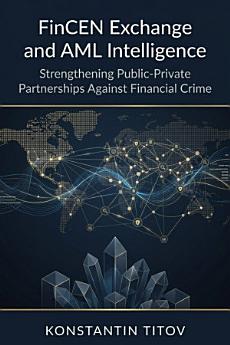
FinCEN Exchange and AML Intelligence explains how this public-private collaboration functions within the broader U.S. anti-money laundering system.
Rather than presenting a basic overview of regulatory obligations, the book explores the strategic logic behind intelligence-driven cooperation between government agencies and financial institutions. It examines how information flows across the AML ecosystem and how collaborative intelligence improves the detection of complex financial crime patterns.
Inside this book, readers will explore:
• the origins and purpose of the FinCEN Exchange initiative
• the evolution of public-private partnerships in financial crime prevention
• how financial institutions and regulators share intelligence about emerging threats
• the role of typologies and strategic briefings in strengthening AML programs
• how collaborative intelligence improves the quality and usefulness of suspicious activity reporting
• governance considerations for institutions participating in information-sharing initiatives
• the relationship between FinCEN Exchange and the broader modernization of the U.S. AML framework
The book provides a structured explanation of how cooperative intelligence models enhance financial crime detection and strengthen regulatory systems.
It is intended for professionals seeking to understand the strategic foundations of modern anti-money laundering frameworks and the growing importance of collaboration between government and industry.
This book will be particularly valuable for:
• AML and financial crime compliance professionals
• financial institutions and risk management teams
• regulatory and enforcement professionals
• lawyers advising financial institutions
• investigators and analysts studying financial crime systems
• students and researchers interested in financial regulation
As financial crime networks continue to evolve, effective prevention increasingly depends on coordinated intelligence across institutions and jurisdictions.
FinCEN Exchange and AML Intelligence provides a clear explanation of how public-private collaboration is reshaping the future of financial crime detection in the United States.
Discover more
About the author
Konstantin Titov is an author and researcher focused on financial regulation, regulatory intelligence, and the architecture of modern compliance systems. His work explores how financial institutions, regulators, and investigative authorities cooperate to detect and prevent complex financial crime.
Titov has written extensively on anti-money laundering systems, regulatory frameworks, and the evolving role of intelligence within financial compliance. His publications examine the intersection of law, financial technology, and investigative strategy, offering structured explanations of how modern regulatory systems operate in practice.
Through his research and writing, he analyzes the design of financial intelligence infrastructures, including suspicious activity reporting, beneficial ownership transparency, and public-private collaboration models used to combat financial crime.
Titov’s work aims to help professionals better understand the strategic logic behind regulatory systems and the role institutions play in supporting financial transparency and global financial integrity.