About this ebook
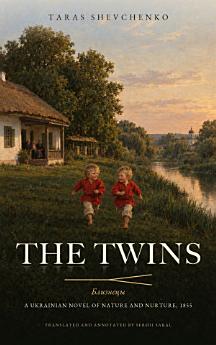
Nikifor Sokira, an old Cossack officer, and his wife Praskovya have lived many years together without a child, and had stopped hoping for one. They take the boys in and christen them Zosim and Savvaty, after the saints whose day falls next — the patrons of beekeeping, and Nikifor keeps bees.
The twins grow up as like each other as two cherries. In time the old people settle that one shall be an officer and the other a seminarist, and cast lots for which is which. Zosim goes to the cadet corps at Poltava, Savvaty to the gymnasium. The poet Kotlyarevsky, who is the gymnasium's trustee, writes to the farm that he can tell them apart only by their uniforms, and that their different upbringing will make "a psychological experiment".
Four years later their letters come home together. One asks for as much money as can be sent, for unforeseen expenses, and is signed "Z. Sokirin". The other is long, and signed "S. Sokira".
"Sokirin, Sokirin," says the old man quietly. "A bad sign."
Two boys born alike, brought up by two roads. The novella is about what each of them becomes.
The man who wrote it
Taras Shevchenko (1814–1861), the poet of Kobzar, was born a serf and bought out of serfdom at twenty-four, with the money raised by a lottery for a portrait painted by Karl Bryullov. In 1847 he was arrested and sent to the Orenburg Corps as a private soldier, under an order that he was not to write and not to draw. He wrote this novella in Russian in the summer of 1855, at the Novopetrovsk fort on the Caspian, and it was not printed until 1886, twenty-five years after his death.
What is in this edition
• The whole novella, unabridged, in a new English translation, made from the 2003 scholarly text
• An introduction to the book, its narrator and where it was written
• 335 notes at the foot of the page — no note sends you to the back of the book
• 33 essays at the back, following the story in order, for after you have finished
• A list of the people of the book, a note on pronunciation, notes on the edition and the translation, and a chronology of Shevchenko's life
Translated from the Russian text established for the 2003 Kyiv edition of Shevchenko's collected works, which a note at the front of the book describes in full.
Discover more
Ratings and reviews
About the author
Taras Shevchenko was born a serf in 1814 and was twenty-four before he was a free man. His freedom was bought in 1838 with the money raised by a lottery for a portrait painted by Karl Bryullov, and he went into the Academy of Arts in Petersburg as a student of painting. Two years after he was freed he published Kobzar, his first book of poems.
In 1845 he was back in Ukraine, travelling for the Archaeographic Commission and describing old churches and monuments in the Poltava country — Lubny, Bahachka, Pereiaslav, Andrushi. Those are the roads his characters walk in this book. On 5 April 1847 he was arrested at the Dnipro crossing by Kyiv as a member of the Cyril and Methodius Brotherhood, and was sent to the Separate Orenburg Corps as a private soldier, under an order that he was not to write and not to draw.
He served at the Orsk fortress, crossed the steppe with the Aral survey expedition, and from October 1850 was held at the Novopetrovsk fort on the Caspian, where he remained nearly seven years. He wrote nine novellas in Russian in the years of his exile. This is one of them, written there in the summer of 1855, and it was not printed in his lifetime.
The 2003 editors of his collected works call the problem of upbringing the main subject of the book, and note that it is the first of his works to take up the educational ideas of the philosopher Grigory Skovoroda — who is also one of its characters. They point out, too, how much of the author’s own life is in it: the Pereiaslav country he had described for the Commission, his time in Kyiv, and his first years of exile, at Orenburg and on the road to the Orsk fortress.
He was released in 1857 and died at Petersburg in 1861, aged forty-seven. He was buried, as he had asked, on a hill near Kaniv, and The Twins first appeared in print twenty-five years later.
Serhii Sakal was born in Ukraine in 1987 and lives in the United States. He read the Ukrainian classics at school, as everyone there does, and came back to them as an adult in a country where they had not been read. His previous translations are Taras Shevchenko’s The Artist, Lesya Ukrainka’s The Forest Song and The Boyar’s Wife, Osyp Turiansky’s Beyond the Limits of Pain, Volodymyr Vynnychenko’s Notes of a Snub-Nosed Mephistopheles, Andrii Chaikovsky’s After His Sister, and Ivan Franko’s For the Hearth.
He translated this one because it is the second Shevchenko novella in this series, and because a book written under an order forbidding its author to write deserves to be read in more languages than one.