About this ebook
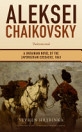
Pavlus is fifteen. He has been taught to ride, to shoot and to throw a lasso, because that is what a boy on this frontier is taught. The cottages and the church burn, the men who stood in front of them are cut down or roped, and the people who can be sold are driven south. His sister Hanna is among them.
He flees into the steppe on a Tatar horse, and a Cossack company takes him in. When the company has fought and Hanna is not among the people won back, his father and brother tell him it is over.
He goes after her on his own.
What follows is the thing the steppe does to a boy riding alone. He is caught. His arms and his legs are felt and his teeth are looked at, the way traders handle cattle at a market, and he is sold to a Tatar caravan. It carries him across Perekop into the Crimea, to a rich merchant's stockaded homestead, where nothing he can do by force will get him one step nearer to Hanna.
So he uses his head instead. He invents, he bargains, and he holds a fact back until it is worth something to the man who wants it.
He came for his sister. What he is finally offered is not what he set out for.
The man who wrote it
Andrii Chaikovsky (1857–1935) was a lawyer in the Galician country towns and one of the builders of Ukrainian civic life there — reading rooms, the Prosvita and Sich societies, the Ukrainian Sich Riflemen. He wrote for decades, and the historical novels he wrote for the young are what he is remembered for. За сестрою appeared in 1907, for an audience that was being taught in school that it had no history, and Ukrainian children have been reading it ever since.
What is in this edition
• The complete novel, all nine chapters, in a new English translation
• An introduction to Chaikovsky, and to the frontier the book is set on
• 37 short footnotes at the foot of the page — nothing to look up, nothing in the way
• 19 essays at the back, one for each stretch of the story, for afterwards
• A cast list, a chronology, a note on how the names are said, and a note on the words the translation keeps in the original and why
It was written for young readers and it still reads that way. Short sentences, plain narration, and dialogue carrying the scenes — with the slave trade at the middle of it, told straight.
Translated from the modernised Ukrainian electronic text of the novel, which a note at the front of the book describes in full.
Discover more
Ratings and reviews
About the author
Andrii Chaikovsky was a working lawyer who wrote books in the evenings for decades, and the two halves of that life are not separate. The law kept him in small Galician towns among the people he wrote about. The writing came out of the same impulse as the reading rooms and the gymnastic societies he spent his energy organising: a conviction that a people without a state of its own keeps itself by knowing what it has been.
He wrote in several directions — memoirs, stories of Galician village life, a sharp little sequence about drink — but the books that lasted are the historical novels, and most of those were written for the young. They are about Cossacks, and they are romantic in the plain sense: brave men, hard rides, a clear enemy. What keeps them from being merely that is the accuracy of the furniture. Chaikovsky knew what a frontier village looked like, what a raiding party came for, what a captive was worth and who paid it, and he put all of it in without stopping the story to explain.
За сестрою, published in 1907, is the shortest and the best known of them. Ukrainian children have been reading it ever since, usually at about the age of the boy in it.
When the Austrian empire ended he was sixty-one, and he served the West Ukrainian People’s Republic as commissioner of the county he had been born in. That state lasted months. He went back to his desk, was elected to preside over his fellow writers in Lviv, and kept publishing until the year he died.
Serhii Sakal was born in Ukraine in 1987 and lives in the United States. He read the Ukrainian classics at school, as everyone there does, and came back to them as an adult in a country where they had not been read. His previous translations are Taras Shevchenko’s The Artist, Lesya Ukrainka’s The Forest Song and The Boyar’s Wife, Osyp Turiansky’s Beyond the Limits of Pain, and Volodymyr Vynnychenko’s Notes of a Snub-Nosed Mephistopheles.
He translated this one because it is the book Ukrainian children are given when they are old enough to be told what the steppe was, and because an adventure story is the hardest kind to bring across without making it sound like a costume.