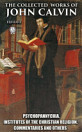
About this ebook
First published in 1553 amid the turbulent religious landscape of sixteenth-century Geneva, John Calvin’s Commentary on John stands as a monumental achievement in biblical scholarship. Approaching the text with his trademark principle of “lucid brevity,” the French reformer seeks to lay bare the mind of the evangelist without encumbering the reader with unnecessary digressions. For Calvin, the Gospel of John was the indispensable key to the other three accounts, providing the rich theological soul that explains the earthly life of Christ.
Throughout this work, Calvin focuses intently on the incarnation, the dual nature of Christ, and the sovereign grace of God in the salvation of humanity. He guides readers through John’s distinctive narrative—from the celestial heights of the opening prologue to the high priestly prayer and the poignant farewell discourses. Rather than treating the text as mere historical record, Calvin reveals a living portrait of Jesus as the eternal Word made flesh, the shepherd of the faithful, and the source of all spiritual life.
What distinguishes this commentary is its remarkable balance of rigorous humanist philology and pastoral warmth. Calvin’s deep knowledge of original languages and Patristic sources never obscures his chief desire: to nourish the faith of ordinary believers and bolster the preaching of the church. The result is an exposition that is intellectually formidable yet consistently aimed at the heart, challenging readers to apprehend the glory of Christ through faith alone.
Centuries after its composition, Calvin’s exposition of John remains essential reading for theologians, pastors, and serious students of the Bible. Its blend of textual precision, theological clarity, and devotional passion offers timeless insight into the core message of the Christian faith.
Discover more
Ratings and reviews
About the author
John Calvin (1509-1564) was a prominent French theologian, pastor, and reformer during the Protestant Reformation. He is best known for his influential work in systematic theology, particularly his emphasis on the sovereignty of God and the doctrine of predestination. Calvin's writings, including his magnum opus, Institutes of the Christian Religion, have had a lasting impact on Reformed theology and continue to shape Christian thought to this day.