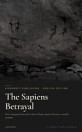
About this ebook
I started writing this after watching how the public conversation about AI keeps asking one question: will it take my job? The question is concrete and urgent. It also assumes the relevant unit is "worker." There's a less comfortable question underneath it: what happens to a species that loses its competitive edge in the niche that defined it?
The book reads AI through an ecological frame instead of a technological one. Niche theory from biology. Carrying capacity and saturation signals. Where AI already wins (text summarisation, code generation, first-draft synthesis) and where it doesn't yet (decisions with skin in the game, embodied work, novel framing). Niche-construction theory and the paradox: humans built the tool that may move into the niche they cleared by building tools.
I'm an operator who runs three small businesses in Indonesia. AI changed my drafting workflow, didn't change my workshop. The hammer still gets picked up by hand. The book is honest about that asymmetry. It doesn't sell AGI timelines and doesn't sell the panic. It asks what an eagle would think about drones, if eagles could ask anything at all.
For readers looking for ecology-as-frame for AI, niche theory and carrying capacity, the difference between job-replacement and species-position questions, post-ChatGPT labour and cognition. Written from operator context in Indonesia, but the diagnostics apply to any small-business owner, knowledge worker, or curious reader watching their domain change shape.
Discover more
About the author
Ibrahim Anwar, who writes as Hibranwar. An operator who runs three small businesses in Indonesia: industrial pump distribution, engineering and welding workshop, and handmade leather craft. Based in Cileungsi, Bogor. Writes from the field-operator perspective, not a consultant's.
A practising zettelkasten user since 2019. Publishes for readers who want to read from an operator with skin in the game.
ORCID: 0009-0006-0425-4923