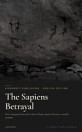
About this ebook
I started this book because the working operator gets handed Taleb every other year as if no one before him had argued that human beings overestimate their grip on the systems that contain them. Four people from sociology, physics, system dynamics, and macro-history said versions of that long before The Black Swan. None of them rang the bell hard enough to break out of their discipline.
The book reads each of them on the question of cognitive limits. Meadows on leverage points and system traps. Harari on shared fictions as coordination infrastructure. Luhmann on autopoietic social systems that can't see themselves from inside. Hawking on the information paradox and what physics says about prediction. Then the chapter on convergence — what it means when four independent investigations arrive at structurally similar humility about human understanding.
I'm an operator running three small businesses in Indonesia. I don't have a system-dynamics background. What I have is fifteen years of being wrong about how a quotation would land, a tender would close, a vendor would behave. The book is a way of taking that operator humility and giving it a real reading list.
For readers looking for Meadows Harari Luhmann Hawking read against each other, intellectual history of cognitive humility, the difference between knowing a system and operating inside it, why Taleb arrived late and why that doesn't matter much. Written from operator context in Indonesia, but the diagnostics apply to any practitioner who has tried to predict their own market for a quarter.
Discover more
About the author
Ibrahim Anwar, who writes as Hibranwar. An operator who runs three small businesses in Indonesia: industrial pump distribution, engineering and welding workshop, and handmade leather craft. Based in Cileungsi, Bogor. Writes from the field-operator perspective, not a consultant's.
A practising zettelkasten user since 2019. Publishes for readers who want to read from an operator with skin in the game.
ORCID: 0009-0006-0425-4923