About this ebook
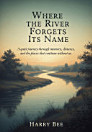
Mara Ellison does not return to Greyhaven out of longing. She comes because of a letter—brief, formal, and impossible to ignore—informing her that she has inherited a neglected coastal orchard from a relative she barely remembers.
The town she left behind has not changed in any obvious way. The sea still withdraws and returns with quiet certainty, the land still carries the same salt-laced stillness, and the orchard, though overgrown and half-forgotten, endures. What has changed is less visible. In stepping back into Greyhaven, Mara enters a landscape shaped not only by time, but by what has been left unresolved.
As she begins the slow work of tending the orchard, Mara discovers that the land does not yield its history easily. Each task—clearing branches, studying the soil, reading the careful records left behind—reveals fragments of a life lived in quiet attention. The woman who left her the orchard, Eliza Merrin, emerges not through explanation, but through patterns: of patience, of observation, of decisions made without announcement.
With the guidance of a reserved neighbor who has long watched over the place, Mara is drawn into a deeper understanding of the orchard’s rhythms—its tides, its seasons, and its quiet resistance to being restored to what it once was. At the same time, memories of her own past begin to surface, carrying questions about her mother’s sudden departure from Greyhaven and the silence that followed.
When the Sea Leaves Things Behind is a restrained and introspective novel about inheritance in its many forms—of land, of memory, of unfinished choices. It is a story about the quiet work of beginning again, where resolution is not found in answers, but in the willingness to remain present to what cannot be fully understood.
For readers who appreciate literary fiction with depth, atmosphere, and emotional subtlety, this novel offers a meditative exploration of belonging, change, and the delicate line between leaving and staying.
Ratings and reviews

- Flag inappropriate

- Flag inappropriate

- Flag inappropriate
About the author
About the Author – Harry Bee
Harry Bee writes about the quiet parts of life—the moments that don’t ask for attention, but stay with us the longest.
Rather than telling loud stories, he is drawn to what lingers beneath them: memory, distance, identity, and the subtle ways people change without noticing. His work often lives in the space between things—between who we were and who we are becoming, between places we’ve left and the ones that never quite leave us.
He believes that not everything needs resolution, and that some of the most meaningful experiences are the ones we never fully explain—not even to ourselves.
Harry Bee does not write to give answers.
He writes to stay with the questions a little longer.