About this ebook
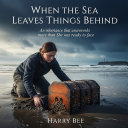
Mara Ellison returns to the estuary house she left behind more than a decade ago, expecting to settle an inheritance and move on. The house remains as she remembers it—quiet, intact, resistant to change—but beyond its walls, something has shifted. The orchard no longer bears fruit, and among its trees stand small wooden markers, each carved with a name. Along the water’s edge, others appear and disappear with the tide.
What begins as a simple return becomes a slow unearthing. Hidden letters reveal a past her family never fully spoke of—a summer that seemed to stretch beyond its time, a series of events witnessed but never agreed upon, and a quiet fracture between those who experienced them. As Mara follows these traces, she finds herself drawn into a landscape where memory does not remain fixed, and where the act of remembering alters what is recalled.
Guided by the measured presence of a neighbor who accepts change, and the unsettling reemergence of a name long avoided, Mara must navigate a place where truth resists singular form. The orchard, the estuary, and the house itself hold a story that cannot be resolved, only carried forward.
What the Tide Left Behind is a restrained, deeply atmospheric literary novel about inheritance, memory, and the quiet persistence of what cannot be fully understood. It explores how places remember differently than people do—and how, sometimes, what remains is not an answer, but a way of seeing.
Ratings and reviews

- Flag inappropriate

- Flag inappropriate

- Flag inappropriate
About the author
About the Author – Harry Bee
Harry Bee writes about the quiet parts of life—the moments that don’t ask for attention, but stay with us the longest.
Rather than telling loud stories, he is drawn to what lingers beneath them: memory, distance, identity, and the subtle ways people change without noticing. His work often lives in the space between things—between who we were and who we are becoming, between places we’ve left and the ones that never quite leave us.
He believes that not everything needs resolution, and that some of the most meaningful experiences are the ones we never fully explain—not even to ourselves.
Harry Bee does not write to give answers.
He writes to stay with the questions a little longer.