About this ebook
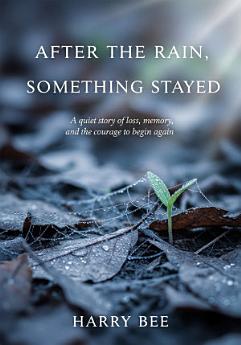
Lila returns to a quiet house at the end of a narrow lane with little more than a suitcase and an unspoken understanding that something in her life has come to a pause. The house has waited, though not in any way she can easily name. Its rooms hold traces of what has been lived, but they do not ask her to remember. Instead, they offer a stillness that reveals itself slowly, asking only that she remain.
In the days that follow, Lila moves through the house and the surrounding landscape with a quiet attentiveness. A letter appears without explanation. A neighbor speaks in observations rather than questions. A faint path leads her to a river whose subtle rising alters the land in ways that are not immediately visible, but impossible to ignore.
As time unfolds, Lila begins to understand that returning is not about reclaiming the past or resolving what was left behind. It is about learning how to live within what remains—within the spaces between memory and presence, between absence and continuity. The house does not offer answers, and the world around it does not demand them. Instead, it reveals a quieter truth: that some changes do not announce themselves, and some meanings do not need to be spoken to exist.
After the Rain, Something Stayed is a restrained, introspective literary novel about stillness, memory, and the quiet ways a life can begin again. With its gentle, observant tone and immersive prose, it invites readers into a world where transformation happens not through dramatic events, but through the accumulation of small, deliberate moments that gradually reshape how we inhabit ourselves and the spaces we return to.
This is a novel for readers who appreciate subtle storytelling, emotional depth, and the quiet power of reflection.
Ratings and reviews

- Flag inappropriate

- Flag inappropriate
- Show review history
- Flag inappropriate
About the author
About the Author – Harry Bee
Harry Bee writes about the quiet parts of life—the moments that don’t ask for attention, but stay with us the longest.
Rather than telling loud stories, he is drawn to what lingers beneath them: memory, distance, identity, and the subtle ways people change without noticing. His work often lives in the space between things—between who we were and who we are becoming, between places we’ve left and the ones that never quite leave us.
He believes that not everything needs resolution, and that some of the most meaningful experiences are the ones we never fully explain—not even to ourselves.
Harry Bee does not write to give answers.
He writes to stay with the questions a little longer.