About this ebook
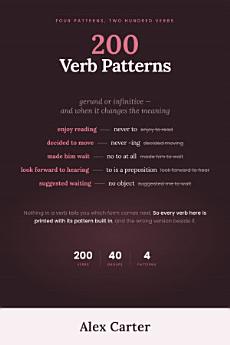
Nothing in enjoy explains the -ing and nothing in want explains the to. The pattern is a property of the individual verb, like its spelling, and anybody offering you a rule here is selling something that breaks on the tenth example. So this book does the honest thing: it sorts two hundred verbs into their patterns, puts them in meaning groups so they are easier to hold, and writes the pattern into the headword - enjoy doing, decide to do, ask somebody to do - so the shape travels with the word.
Six parts: the four patterns, the two big families, the sentences with two people in them, the thirty-odd verbs that take both forms, and everything else that can sit in front of a verb.
Part 5 is why the book exists. I stopped smoking and I stopped to smoke describe opposite lives, both are correct English, and nobody will ever correct you. A back-page table sets out all eight of those verbs side by side.
Discover more
About the author
Alex Carter writes practical English books for people who use the language at work and in ordinary life rather than in a classroom. The books are built around complete examples - real sentences, real situations - on the principle that one worked example teaches more than a page of rules.