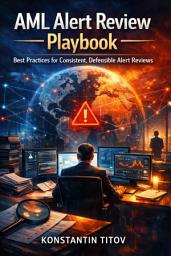
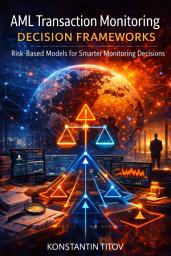
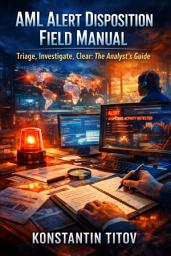
Financial Crime Operations
About this ebook series
Financial Crime Operations Series
Practical Operational Guides for Aspiring and New AML & Financial Crime Analysts
Breaking into Anti-Money Laundering is competitive.
Getting hired is only the first step.
What truly determines success is what happens after you receive your first alert, open your first case file, or are asked to justify your first escalation decision.
The Financial Crime Operations Series is designed for professionals who are:
• Preparing for an AML / Financial Crime Analyst role
• Transitioning into Transaction Monitoring or KYC
• Recently hired and navigating probation
• Moving from theory to real operational work
• Seeking clarity in high-volume alert environments
These books do not focus on exam preparation.
They do not repeat regulatory summaries.
They focus on execution.
Inside this series, you will learn how financial crime operations actually function:
• How to review transaction monitoring alerts step-by-step
• How to distinguish false positives from genuine risk indicators
• How to structure defensible case narratives
• How to document findings clearly and professionally
• How to apply risk-based thinking in real scenarios
• How to approach KYC reviews and EDD files methodically
• How sanctions screening hits are evaluated and escalated
• How QA teams assess analyst performance
For many new analysts, the most difficult moment is not understanding regulations — it is understanding expectations.
What does a “good” case note look like?
How detailed is detailed enough?
When should you escalate?
How do supervisors evaluate your reasoning?
What mistakes typically cause performance issues?
This series answers those questions with structured workflows, practical examples, and operational logic.
Each volume is built around a specific role or function within financial crime operations. The approach is clear, structured, and grounded in real analyst tasks.
You will find:
• Realistic alert review scenarios
• Escalation logic frameworks
• Case writing structure guidance
• Red flag interpretation models
• Decision-making checklists
• Common analyst mistakes and how to avoid them
• Workflow organization techniques for high-volume environments
Whether you are entering AML from another industry, starting your first role in compliance, or strengthening your operational confidence, this series provides the practical foundation that bridges the gap between interview preparation and day-to-day performance.
Financial crime teams are built on consistency, accuracy, and defensible reasoning.
The sooner you master structured thinking, the stronger your professional growth.
If you are serious about building a career in Anti-Money Laundering and Financial Crime Operations, this series was written for your desk - and for your first year in the field.