THE FIRST-PRINCIPLES MIND LAB, A 50-Book Journey from Counting the World to Computers, Mathematics, AI, Agents, Robotics, and the Physical World





About this ebook series
The First-Principles Mind Lab is a fifty-book learning journey for people who have looked at computers, mathematics or artificial intelligence and quietly assumed that the real explanation must live somewhere behind a wall of jargon. This series removes that wall. It begins before code, before algebra, before AI vocabulary, and even before the idea of a computer. The first question is simply: how does a mind learn to see clearly?
The reader starts with the same intellectual freedom that makes a five-year-old powerful: What is this? Why does it happen? How do we know? What changes if I move this? Can I count it? Can I draw it? Can I make the rule fail? That childlike curiosity is paired with adult dignity. The books never speak down to the reader. They do something harder and more respectful: they refuse to skip steps.
A pebble becomes a quantity. Quantity becomes number. Number becomes measurement. Repetition becomes pattern. Pattern becomes a rule. A rule becomes an algorithm. A yes/no switch becomes a bit. Bits become representations. Representations move through memory, interfaces and networks. Mathematics then arrives not as a school subject to survive, but as a set of tools the reader already needs: functions to describe dependable relationships, coordinates to describe position, vectors to bundle features, distance to define similarity, graphs to describe connections, probability to express uncertainty, and optimization to choose under constraints.
Only after those foundations are alive does machine learning appear. Data is shown as recorded observation rather than a mystical fuel. Training becomes repeated adjustment from examples. Evaluation becomes the discipline of asking which mistakes matter. A neural network is introduced as a layered adjustable function, so its logic grows naturally from functions, weights, error and correction that the reader has already met.
Generative AI is then unfolded from the inside out. Words become tokens. Tokens become vectors. Vectors make similarity possible. Attention becomes a mathematical weighting operation rather than a metaphor for consciousness. Language generation becomes repeated next-token prediction from context. Multimodal systems extend the same representational ideas across images, sound and other signals. The aim is not to make the technology look small. It is to make its building blocks visible enough that wonder can coexist with judgment.
The series then shifts from 'What is AI?' to 'How do I work with it well?' Prompting is taught as problem specification, not magic wording. Context becomes a limited working backpack. Retrieval becomes a library door through which changing or private knowledge can be brought into a task. Tools introduce actions, permissions and interfaces. Agents add loops, plans, observations, stop conditions, retries and human approvals. Multi-agent work is treated as coordination with real communication cost, not as an automatic upgrade in intelligence.
The journey does not end at the screen. Sensors turn light, sound, motion and temperature into signals. Feedback loops show how systems compare desired and measured states. Computer vision is built from pixels and tasks. Robotics adds motors, geometry, energy, delay and collision. Simulation and digital twins let a system rehearse before it acts, while the reader learns the crucial difference between a model and the world it represents. This is the point where the physical world pushes back—and where engineering becomes real.
Power is paired with responsibility. Privacy, security, fairness, uncertainty, evaluation and governance are not placed in an appendix as moral decoration. They are their own learning arc because modern AI literacy requires the ability to ask who is affected, what data is necessary, what a malicious input could do, which groups experience different error rates, how a claim can be verified, who may authorize an action, and who remains accountable when a system fails.
The final ten books turn understanding into architecture and life practice. The reader learns why some computation belongs on a device and some in the cloud; why data pipelines and databases often matter more than the model; how components become a product; how work moves through queues, branches, approvals and exceptions; and how cost, latency, energy, reliability and human effort determine whether an AI system is actually useful. The series then returns to the human learner: using AI to learn without surrendering the work of understanding, co-creating without outsourcing taste, applying systems thinking to real community problems, and building a bounded capstone that senses, thinks and acts.
Book 50 does not declare the reader 'finished.' It gives a method for facing whatever arrives next. New model architectures, robotics systems, spatial interfaces, quantum technologies, neuromorphic hardware or other future tools can be approached with the same questions: What is being represented? What is measured? What changes state? What is the rule? Where is uncertainty? What is optimized? What are the constraints? What evidence would make us revise our belief? Who is affected? What happens in the physical world?
That is the true promise of The First-Principles Mind Lab: not fifty volumes of facts to carry, but fifty carefully connected experiences that build a reusable way of seeing. The reader should finish less afraid of mathematics, less dazzled by AI vocabulary, more capable of asking precise questions, and more willing to build, test, verify and learn.
Series Map: Books 1–50
ARC I — THE MIND BEFORE THE MACHINE
Curiosity, measurement, pattern, rules and uncertainty. The reader learns how to think before learning what a computer is.
· Book 1 — The First Question • How do we learn anything if we begin by admitting that we do not yet know?
· Book 2 — The World We Can Count • What changes when we attach numbers to the physical world?
· Book 3 — The Pattern Hiding in Plain Sight • Why does the mind search for repetition, rhythm and regularity?
· Book 4 — The Rule That Makes Things Repeat • How can a thought become a sequence that another person—or a machine—can follow?
· Book 5 — The Honest Guess • How should we think when the world refuses to be certain?
ARC II — INSIDE THE COMPUTER
Bits, programs, memory, interfaces and networks. The machine becomes understandable as layers of simple mechanisms.
· Book 6 — The Switch That Became a Computer • How can billions of tiny yes/no decisions become a general-purpose machine?
· Book 7 — The Recipe a Machine Can Follow • What is programming before we touch a programming language?
· Book 8 — The Room Where a Computer Remembers • What does it mean for a machine to remember something?
· Book 9 — The Doorways In and Out • How does a computer meet the world outside itself?
· Book 10 — The Invisible Roads Between Machines • How do computers share information across rooms, cities and continents?
ARC III — MATHEMATICS AS A THINKING TOOL
Functions, coordinates, similarity, graphs and optimization. Mathematics becomes a language for relationships and choices.
· Book 11 — The Little Machine Called a Function • Why is a function one of the most useful ideas in mathematics and computing?
· Book 12 — The Map Made of Coordinates • How can numbers describe position, direction and many properties at once?
· Book 13 — How Close Is Close? • How can a machine compare things that are not literally the same?
· Book 14 — The Web of Connections • What if the most important information is not inside things, but between them?
· Book 15 — The Best Choice Is Not Always the Biggest • How do we choose well when several goals compete?
ARC IV — DATA LEARNS TO SPEAK
Data, cleaning, learning, prediction and neural networks. Machine learning grows from familiar ideas instead of appearing as magic.
· Book 16 — The World Becomes Data • How does messy reality become something a computer can store and analyze?
· Book 17 — The Messy Basket • Why does learning quality depend so much on how data is prepared?
· Book 18 — Learning from Examples • How can a machine improve behavior from examples instead of receiving every rule by hand?
· Book 19 — Guessing with a Score • How do models turn patterns into predictions, and how do we decide whether those predictions are useful?
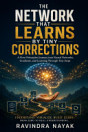
· Book 20 — The Network That Learns by Tiny Corrections • How can many simple mathematical units learn complicated patterns together?
ARC V — GENERATIVE AI FROM THE INSIDE OUT
Tokens, embeddings, attention, generation and multimodality. Modern generative AI is explained with careful metaphors and mathematical continuity.
· Book 21 — How Words Become Pieces • How can a computer work with language when language is made of meaning, sound and context?
· Book 22 — A Map of Meaning Without a Dictionary • How can similar ideas become nearby locations in a mathematical space?
· Book 23 — What Deserves Attention? • How can a model decide which parts of a sequence should influence one another?
· Book 24 — The Machine That Continues the Pattern • What is a large language model actually doing when it writes?
· Book 25 — One Mind, Many Senses • How can one AI system work across text, images, sound and video?
ARC VI — WORKING WITH AI
Prompt design, context, retrieval, tools and agents. The reader moves from asking questions to designing bounded AI workflows.
· Book 26 — Asking Is a Design Skill • Why do instructions to AI work better when goals, context and constraints are explicit?
· Book 27 — The Context Backpack • What can an AI system keep in mind during a task, and what happens when the backpack is too full?
· Book 28 — The Library Door • How can AI use external knowledge instead of relying only on what was absorbed during training?
· Book 29 — When AI Can Use Tools • What changes when an AI system can calculate, search, query a database or control software?
· Book 30 — From Assistant to Agent • When does a one-shot answer become a system that observes, plans, acts and checks its own progress?
ARC VII — AI TOUCHES THE PHYSICAL WORLD
Sensors, feedback, vision, robotics and simulation. Intelligence meets measurement, motion, delay and physical consequences.
· Book 31 — Teaching Machines to Sense • How can a machine measure the physical world without confusing a sensor reading with reality itself?
· Book 32 — The Loop That Keeps Things Steady • Why do thermostats, cruise control and many robots need feedback?
· Book 33 — When a Machine Learns to See • How can pixels become useful descriptions of objects, motion and scenes?
· Book 34 — The Robot Has a Body • What changes when an intelligent system has mass, motors, limits and consequences?
· Book 35 — The World We Can Rehearse • Why do intelligent machines practice in simulations and digital twins before acting in the real world?
ARC VIII — TRUST, SAFETY AND HUMAN RESPONSIBILITY
Privacy, security, fairness, verification and governance. The reader learns that capability without boundaries is incomplete engineering.
· Book 36 — The Line Around My Data • What information should a system collect, keep, share or forget?
· Book 37 — The Locked Door and the Clever Trick • How do useful systems defend themselves from mistakes, misuse and manipulation?
· Book 38 — The Mirror Can Be Crooked • Why can a system reproduce unfairness even when nobody writes an unfair rule?
· Book 39 — The Confident Wrong Answer • How do we work with AI that can be fluent, useful and still wrong?
· Book 40 — The Human Hand on the Wheel • Who remains responsible when AI recommends, decides or acts?
ARC IX — BUILDING USEFUL SYSTEMS
Edge/cloud choices, data pipelines, architecture, orchestration and economics. Ideas become dependable services rather than demos.
· Book 41 — Where Should the Thinking Happen? • Why do some AI tasks run on a device, some at the edge, and others in remote data centers?
· Book 42 — The River Behind Every Smart System • What has to happen to data before, during and after an AI system uses it?
· Book 43 — Small Parts, One Useful Product • How do interfaces, services, models and people become one coherent product?
· Book 44 — Work That Moves by Itself • How can tasks flow across rules, people, software and AI without getting lost?
· Book 45 — The Price of Intelligence • How do we decide whether an AI system is worth running at all?
ARC X — HUMAN + AI + WORLD
Learning, creativity, systems thinking, a physical-AI capstone and lifelong adaptation. The final goal is stronger human judgment and useful creation.
· Book 46 — Learning With a Machine Without Losing Your Mind • How can AI accelerate learning without replacing the learner's own reasoning?
· Book 47 — The Creative Partner That Needs a Director • How can people use generative AI to explore ideas without outsourcing taste, purpose or responsibility?
· Book 48 — The Neighborhood as a System • How do we reason about real problems where technology, people, incentives and the environment interact?
· Book 49 — Build Something That Senses, Thinks, and Acts • Can we combine the entire journey into one bounded, useful physical-world system?
· Book 50 — The Mind That Keeps Growing • How do we stay capable when tools, models and technologies keep changing?