About this ebook
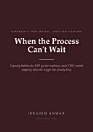
I have watched this happen across my own operations more times than I want to admit. The pumps order goes out same day; the approval sits in someone's inbox for eleven days. The leather batch is cut and logged in an afternoon; the payment release waits on three sign-offs that were not, as far as anyone knows, in sequence. The work was never slow. The queue was.
This book is about that gap: the difference between processing time and wait time, and why the wait time is almost always the bigger number while remaining invisible on every status report. The theory of constraints names the bottleneck as any process whose limited capacity reduces the capacity of the whole chain. I had assumed the bottleneck was something mechanical, a machine, a supplier, a market. The more I tracked elapsed time against actual work time, the more the bottleneck resolved into a person: me, or the person above me, or the one whose inbox the task sat in for two weeks unmarked.
This book does not argue for removing human judgment from decisions that need it. It argues for seeing where the human-in-the-loop requirement is adding latency without adding quality, and for restructuring those points before buying faster machines or hiring more staff. Most of the fixes are administrative, not technical.
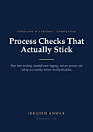
Written from running small businesses in Indonesia, but the lead time, wait time, queueing, and approval-chain diagnostics apply in any operation where elapsed time is longer than work time.
Discover more
About the author
Ibrahim Anwar, who writes as Hibranwar. An operator who runs three small businesses in Indonesia: industrial pump distribution, engineering and welding workshop, and handmade leather craft. Based in Cileungsi, Bogor.
Writes from the field-operator perspective, not a consultant's.
A practising zettelkasten user since 2019. Publishes for readers who want to read from an operator with skin in the game.
ORCID: 0009-0006-0425-4923