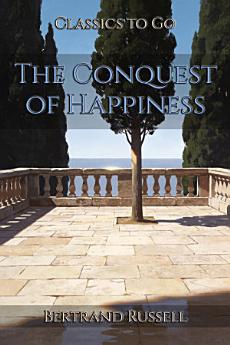
The Conquest of Happiness: Restored Classics to Go Edition
About this ebook
About the author
Bertrand Russell was a British philosopher, logician, mathematician, social critic, and public intellectual whose long life spanned the upheavals of the modern world, from the late Victorian era through two world wars and into the nuclear age. Born into aristocratic privilege in 1872, he was educated at Cambridge and quickly emerged as one of the most brilliant thinkers of his generation, helping to transform logic and analytic philosophy while also becoming a fearless commentator on politics, education, religion, and human freedom. Over a remarkably productive career, he wrote with unusual clarity for a thinker of such range, making difficult ideas accessible to ordinary readers and shaping debates far beyond the academy. His work often returned to enduring concerns: how to live well, how to think honestly, how to resist dogma, and how to build a more humane society. He was deeply interested in the sources of anxiety, the habits that distort happiness, and the social conditions that allow people to flourish, themes that feel especially urgent in today's anxious, distracted, and polarized world. Russell's legacy lies not only in his intellectual achievements but in his conviction that reason, skepticism, and compassion should guide public life. Readers today still turn to him for wisdom that is both rigorous and humane, and he will especially appeal to anyone drawn to philosophy, self-understanding, political debate, or clear-minded reflections on what makes a meaningful life.