About this ebook
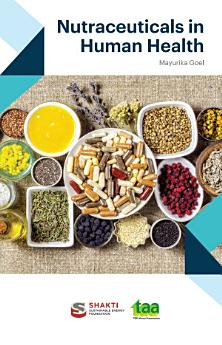
Whereas marked changes in the lifestyles of Indians, particularly those living in cities, have greatly increased the incidence of such lifestyle-related disorders as diabetes and hypertension and in diseases of the heart, the covid-19 pandemic has made people greatly conscious of their health and well-being. That consciousness has also fuelled the demand for ‘nutraceuticals’, a term that the Oxford dictionary offers as a synonym for ‘functional food’, defining it simply as “a food containing health-giving additives.” However, there is much more to nutraceuticals than that.
Starting from some explanation of how the changing work pattern of urban Indians – more sedentary, more stressful, and less predictable – affects their health, Nutraceuticals in Human Health shows what nutraceuticals are made up of, how they differ from pharmaceuticals (drug), and why the Food Safety and Standards Authority of India has stepped in to regulate the industry. This little book even shows you how to read the label pasted on a bottle of medicine and answers a number of frequently asked questions on consuming nutraceuticals.
Going beyond the individual citizen, the author, an accomplished researcher in the field, then goes on to describe the current scenario in terms of the expanding market, global trends that drive the industry at present, and the challenges it faces. The concluding section returns to the individual with some remarks on an individual-centric approach to nutraceuticals.
Contents:
Foreword
Preface
Food is medicine: introducing nutraceuticals
Function of food nutrients: the balanced diet
Indian diet and changes in lifestyle
Various definitions of nutraceuticals
Nutraceuticals: an umbrella term
Some terms under the Food Safety and Standards Act
Sources of nutraceuticals
What is in our food supplements
Consumer awareness and regulation
Labelling categories and claims
How to read a label
Regulations and false claims
Marketing gimmicks versus realities
Pharmaceuticals versus nutraceuticals
Current market space for nutraceuticals
Global trends in a nutshell
Indian scenario
Major growth drivers of nutraceuticals market
Restorative concluding remarks
Consuming nutraceuticals: frequently asked questions
Honest Abe’s valuable advice
Challenges for nutraceuticals
Final remarks: individual-centric approach to nutraceuticals
Bibliography
Some useful websites
Audience: Adults who are concerned about topical issues but lack the understanding to make sense of what they read or watch in the mass media
Shelving: Food Engineering and Technology, Food Science and Technology, Biotechnology, Life Sciences
Discover more
About the author
Mayurika Goel works as Associate Fellow, Division of Sustainable Agriculture, TERI Deakin NanoBiotechnology Centre, The Energy and Resources Institute, Delhi, India and as Honorary Fellow, Deakin University, Australia. As part of TERI’s Centre of Excellence on Integrated Biorefinery and Value-Added Products from Marine Algae, funded by the Department of Biotechnology, she leads a research group on natural products from microorganisms, particularly marine algae, to find novel and sustainable ingredients for food products.
Mayurika’s doctoral and post-doctoral research in applied chemistry involved visits to several prestigious institutions including George-August University of Gottingen in Germany, Aristotle University of Thessaloniki and the Hellenic Pasteur Institute in Greece, Imperial College in the UK, and the Formatex Research Centre in Spain.
Her research focuses on exploiting native natural resources using modern biotechnology to provide safer and cleaner ingredients to foods and food products. So far, Mayurika has published 28 research papers in peer-reviewed journals, made 24 presentations at national and international conferences, contributed 4 book chapters, and guided two doctoral candidates.