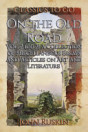
On the Old Road: Restored Classics to Go Edition

· Otbebookpublishing
Ebook
517
Pages
Eligible

About this ebook

On the Old Road gathers John Ruskin's wide-ranging essays on art, literature, and criticism into a searching study of beauty, craft, and cultural decline. Moving from autobiographical recollection in My First Editor to analyses of Christian art, Pre-Raphaelitism, architecture, education, and artistic principles, Ruskin traces the history and theory of visual art with passionate seriousness. He weighs the achievements of painters such as Samuel Prout, Sir Joshua Reynolds, and Holbein, while arguing that the nineteenth century's scientific intelligence has not prevented a weakening of true artistic creation. Mass society, mechanical imitation, and the loss of local devotion, he suggests, have replaced living workmanship with empty cleverness. Throughout, Ruskin defends art as a moral and intellectual force shaped by the character of society itself. He praises reverent scholarship such as Lord Lindsay's Christian Art even as he rejects abstract metaphysics, and he insists that honest training, disciplined line, and truthful humor matter more than shortcuts or vanity. Rich in criticism, footnotes, and historical reference, the collection is both a learned defense of serious art and a forceful warning against the erosion of artistic truth. This edition has been fully restored with modern typesetting, custom cover design.
On the Old Road gathers John Ruskin's wide-ranging essays on art, literature, and criticism into a searching study of beauty, craft, and cultural decline. Moving from autobiographical recollection in My First Editor to analyses of Christian art, Pre-Raphaelitism, architecture, education, and arti...

Discover more

About the author

John Ruskin was one of the nineteenth century's most influential English writers, critics, and thinkers, born in London in 1819 and educated in a home that encouraged close observation of the natural world, moral seriousness, and literary culture. Over a long and remarkably varied life, he became known as an art critic, essayist, social commentator, lecturer, and reformer whose ideas reached far beyond the world of aesthetics. His writing helped redefine how readers understood painting, architecture, craftsmanship, and the relationship between beauty and ethical life, while his later social criticism challenged the costs of industrial modernity and the neglect of workers, education, and the environment. Ruskin's work is marked by passionate prose, vivid description, and a conviction that art is inseparable from truth, labor, and human responsibility. He was deeply concerned with the spiritual and social condition of society, and his reflections on nature, inequality, and the dangers of mechanical thinking feel strikingly current today. Though his views were sometimes complex and contradictory, his influence on art history, design, conservation, and social thought has been enduring, shaping generations of readers and reformers. Modern readers continue to find in Ruskin a powerful voice for attentive looking, moral imagination, and the defense of beauty in everyday life. He will especially appeal to readers interested in art criticism, Victorian literature, social thought, architecture, and anyone drawn to richly observant prose that links culture with conscience.
John Ruskin was one of the nineteenth century's most influential English writers, critics, and thinkers, born in London in 1819 and educated in a home that encouraged close observation of the natural world, moral seriousness, and literary culture. Over a long and remarkably varied life, he became...

Rate this ebook

Tell us what you think.

Reading information

Smartphones and tablets
Install the Google Play Books app for Android and iPad/iPhone. It syncs automatically with your account and allows you to read online or offline wherever you are.
Laptops and computers
You can listen to audiobooks purchased on Google Play using your computer's web browser.
eReaders and other devices
To read on e-ink devices like Kobo eReaders, you'll need to download a file and transfer it to your device. Follow the detailed Help Center instructions to transfer the files to supported eReaders.