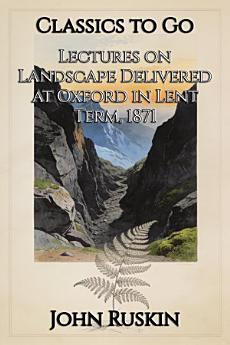
Lectures on Landscape Delivered at Oxford in Lent Term, 1871: Restored Classics to Go Edition

· Otbebookpublishing
Ebook
70
Pages
Eligible

About this ebook

John Ruskin's Lectures on Landscape opens with a fierce defense of landscape painting as a serious art of moral and natural inquiry, not a decorative study of scenery. He argues that mountains, mist, lava, sea, fields, ruins, and animals matter because they are bound to human labor, danger, nourishment, shelter, memory, and suffering, and he uses Turner as the central example of an artist who reveals that deeper meaning. Great landscape art, Ruskin insists, depends on sympathy, discipline, and a strong inner life: the painter must observe patiently, begin with quiet light, understand outline before atmosphere, and finish with humility rather than display. The lectures also distinguish true artistic power from mere picturesque effect, praising Turner's exact drawing, his control of light and shade, and his judgment in selecting what to include or omit, as in views of Blair Athol and Dumblane Abbey. Ruskin then broadens the discussion into a theory of art's opposing impulses—the Gothic and Greek, color and chiaroscuro, crystal and clay—showing how great painters combine clarity, mystery, passion, and precision. This edition has been fully restored with modern typesetting, custom cover design.
John Ruskin's Lectures on Landscape opens with a fierce defense of landscape painting as a serious art of moral and natural inquiry, not a decorative study of scenery. He argues that mountains, mist, lava, sea, fields, ruins, and animals matter because they are bound to human labor, danger, nouri...

Discover more

About the author

John Ruskin was one of the most influential English writers, critics, and thinkers of the nineteenth century, a man whose interests ranged from art and architecture to social reform, education, and the moral life of modern society. Born in London and educated at Oxford, he came to public prominence through his passionate criticism of painting and his insistence that art should be judged not only by beauty but by truth, craftsmanship, and ethical purpose. Over a long and remarkably productive career, he wrote with rare force on nature, travel, design, and the responsibilities of wealth and labor, helping to shape the way generations of readers understood both the visual arts and the industrial age. His work often explores the relationship between human beings and the natural world, the dangers of materialism, and the need for imagination, sincerity, and social justice in public life. These concerns remain strikingly current today, especially in an era still wrestling with environmental loss, inequality, and the meaning of meaningful work. Ruskin's legacy endures because he wrote as someone who believed ideas should change how people live, look, and act; his prose can be visionary, urgent, and deeply humane. Readers who care about art, nature, ethics, and the social responsibility of culture will find him especially rewarding.
John Ruskin was one of the most influential English writers, critics, and thinkers of the nineteenth century, a man whose interests ranged from art and architecture to social reform, education, and the moral life of modern society. Born in London and educated at Oxford, he came to public prominen...

Rate this ebook

Tell us what you think.

Reading information

Smartphones and tablets
Install the Google Play Books app for Android and iPad/iPhone. It syncs automatically with your account and allows you to read online or offline wherever you are.
Laptops and computers
You can listen to audiobooks purchased on Google Play using your computer's web browser.
eReaders and other devices
To read on e-ink devices like Kobo eReaders, you'll need to download a file and transfer it to your device. Follow the detailed Help Center instructions to transfer the files to supported eReaders.