Why Some Like It Hot: Food, Genes, and Cultural Diversity
About this ebook
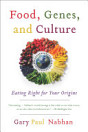
Formerly misunderstood as "genetic disorders," many of these sensitivities are now considered to be adaptations that our ancestors evolved in response to the dietary choices and diseases they faced over millennia in particular landscapes. They are liabilities only when we are "out of place," on globalized diets depleted of certain chemicals that triggered adaptive responses in our ancestors.
In Why Some Like It Hot, an award-winning natural historian takes us on a culinary odyssey to solve the puzzles posed by "the ghosts of evolution" hidden within every culture and its traditional cuisine. As we travel with Nabhan from Java and Bali to Crete and Sardinia, to Hawaii and Mexico, we learn how various ethnic cuisines formerly protected their traditional consumers from both infectious and nutrition-related diseases. We also bear witness to the tragic consequences of the loss of traditional foods, from adult-onset diabetes running rampant among 100 million indigenous peoples to the historic rise in heart disease among individuals of northern European descent.
In this, the most insightful and far-reaching book of his career, Nabhan offers us a view of genes, diets, ethnicity, and place that will forever change the way we understand human health and cultural diversity. This book marks the dawning of evolutionary gastronomy in a way that may save and enrich millions of lives.
Discover more
About the author
Gary Paul Nabhan is an internationally-celebrated nature writer, seed saver, conservation biologist and sustainable agriculture activist who has been called “the father of the local food movement” by Utne Reader, Mother Earth News, Carleton College and Unity College. Gary is also an orchard-keeper, wild forager and Ecumenical Franciscan brother in his hometown of Patagonia, Arizona near the Mexican border.
He is author or editor of twenty-four books, some of which have been translated into Spanish, Italian, French, Croation, Korean, Chinese and Japanese. For his writing and collaborative conservation work, he has been honored with a MacArthur “genius” award, a Southwest Book Award, the John Burroughs Medal for nature writing, the Vavilov Medal, and lifetime achievement awards from the Quivira Coalition and Society for Ethnobiology.
He works as most of the year as a research scientist at the Southwest Center of the University of Arizona, and the rest as co-founder-facilitator of several food and farming alliances, including Renewing America’s Food Traditions and Flavors Without Borders.