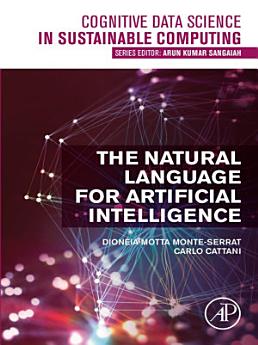
The Natural Language for Artificial Intelligence
Mar 2021 · Academic Press
Ebook
252
Pages
family_home
Eligible
info
About this ebook
The Natural Language for Artificial Intelligence presents the biological and logical structure typical of human language in its dynamic mediating process between reality and the human mind. The book explains linguistic functioning in the dynamic process of human cognition when forming meaning. After that, an approach to artificial intelligence (AI) is outlined, which works with a more restricted concept of natural language that leads to flaws and ambiguities. Subsequently, the characteristics of natural language and patterns of how it behaves in different branches of science are revealed to indicate ways to improve the development of AI in specific fields of science. A brief description of the universal structure of language is also presented as an algorithmic model to be followed in the development of AI. Since AI aims to imitate the process of the human mind, the book shows how the cross-fertilization between natural language and AI should be done using the logical-axiomatic structure of natural language adjusted to the logical-mathematical processes of the machine. - Presents a comprehensive approach to natural language and its inherent and complex dynamics - Develops language content as the next frontier, identifying the universal structure of language as a common structure that appears in both AI and cognitive computing - Explains the standard structure present in cognition and AI, making them interchangeable - Offers examples of the application of the universal language model in image analysis and conventional language
The Natural Language for Artificial Intelligence presents the biological and logical structure typical of human language in its dynamic mediating process between reality and the human mind. The book explains linguistic functioning in the dynamic process of human cognition when forming meaning. Af...
Discover more
About the author
Dionéia Motta Monte-Serrat is a Post-doctoral Researcher at the Department of Computation and Mathematics of Faculty of Philosophy, Sciences and Letters of Ribeirao Preto – University of Sao Paulo, FFCLRP-USP, Brazil; Collaborating researcher at Language Institute of University of Campinas, IEL-UNICAMP, Brazil. Faculty Member at University of Ribeirao Preto, UNAERP, Brazil. Direct Doctoral degree in Psychology, FFCLRP-USP, Brazil. Doctoral degree program partly completed at Université Paris III, Sorbonne Nouvelle (2010, CAPES-BEX). Internship at École des Hautes Études en Sciences Sociales, Paris (2012, FAPESP). Undergraduate degrees in Languages and Law. Member of the British Wittgenstein Society. Associate Researcher, National Science Network for Education (Rede CpE, Brazil). Research interest: Neuroscience; Neurolinguistics; Neurocognition; Brain Impairment; Artificial Intelligence; Neurophysiology; Natural Language, Education, Social inclusion.Carlo Cattani is a Professor of Mathematical Physics whose research spans applied mathematics, wavelet theory, nonlinear systems, multiscale analysis, and fractional calculus. His work focuses on the development of mathematical and computational methods for modeling complex phenomena in physics, engineering, biomedical systems, and image analysis. He has contributed to the advancement of multiscale and fractal-based approaches and their integration with modern data-driven methodologies. His research interests include mathematical modeling, signal and image processing, inverse problems, and interdisciplinary applications of applied mathematics. Professor Cattani has authored over 300 scholarly publications and several research monographs in applied mathematics and related fields. He is actively involved in international research collaborations that connect mathematical theory with practical challenges in science, engineering, and healthcare applications.
Dionéia Motta Monte-Serrat is a Post-doctoral Researcher at the Department of Computation and Mathematics of Faculty of Philosophy, Sciences and Letters of Ribeirao Preto – University of Sao Paulo, FFCLRP-USP, Brazil; Collaborating researcher at Language Institute of University of Campinas, IEL-U...
Rate this ebook
Tell us what you think.
Reading information
Smartphones and tablets
Install the Google Play Books app for Android and iPad/iPhone. It syncs automatically with your account and allows you to read online or offline wherever you are.
Laptops and computers
You can listen to audiobooks purchased on Google Play using your computer's web browser.
eReaders and other devices
To read on e-ink devices like Kobo eReaders, you'll need to download a file and transfer it to your device. Follow the detailed Help Center instructions to transfer the files to supported eReaders.