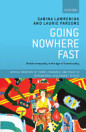
Going Nowhere Fast: Mobile Inequality in the Age of Translocality
Aug 2020 · Oxford University Press
Ebook
176
Pages
family_home
Eligible
info
About this ebook
Rising levels of global inequality and migrant flows are both critical global challenges. Set within the Southeast Asian nation of Cambodia, Going Nowhere Fast sets out to answer a question of global importance: how does inequality persist in our increasingly mobile world? Inequality is often referred to as the greatest threat to democracy, society, and economy, and yet opportunity has apparently never been more accessible. Long and short distance transport - from motorbikes to aeroplanes - are available to more people than ever before and telecommunications have transformed our lives, ushering in an era of translocality in which the behaviour of people and communities is influenced from hundreds or even thousands of miles apart. Yet amidst these complex flows of people, ideas, and capital, persistent inequality cuts a jarringly static figure. Going Nowhere Fast brings together a decade of research to examine this uneven development in Cambodia, making a case for inequality as a 'total social fact' rather than an economic phenomenon, in which stories, stigma, obligation and assets combine to lock social structures in place. Going Nowhere Fast: Inequality in the Age of Translocality speaks from an in-depth perspective to an issue of global relevance: how inequality persists in our hypermobile world. Focusing on pressing issues in Cambodia that resonate beyond, it investigates how human movement within and across the nation's borders are intertwined with societal threats and challenges, including of precarious labour and agricultural livelihoods; climate and environmental change; the phenomenon of land grabbing; and the rise of popular nationalism.
Rising levels of global inequality and migrant flows are both critical global challenges. Set within the Southeast Asian nation of Cambodia, Going Nowhere Fast sets out to answer a question of global importance: how does inequality persist in our increasingly mobile world? Inequality is often ref...
Discover more
About the author
Dr Sabina Lawreniuk is a Leverhulme Early Career Fellow in the Department of Geography at Royal Holloway, University of London. She is currently engaged in an activist research project, collaborating with trade unions, employers, regulators, global brands, and other industry stakeholders in the Cambodian garment sector to examine inequalities in global supply chains and empower marginalised women workers. Dr Laurie Parsons is a British Academy Postdoctoral Fellow in the Department of Geography at Royal Holloway, University of London. He is recipient of a recent Global Challenges funding award offered jointly by the Economic and Social Research Council and the UK's Department for International Development entitled 'Blood Bricks', examining the relationship between climate change, migration and modern slavery in Cambodian brick factories.
Dr Sabina Lawreniuk is a Leverhulme Early Career Fellow in the Department of Geography at Royal Holloway, University of London. She is currently engaged in an activist research project, collaborating with trade unions, employers, regulators, global brands, and other industry stakeholders in the C...
Rate this ebook
Tell us what you think.
Reading information
Smartphones and tablets
Install the Google Play Books app for Android and iPad/iPhone. It syncs automatically with your account and allows you to read online or offline wherever you are.
Laptops and computers
You can listen to audiobooks purchased on Google Play using your computer's web browser.
eReaders and other devices
To read on e-ink devices like Kobo eReaders, you'll need to download a file and transfer it to your device. Follow the detailed Help Center instructions to transfer the files to supported eReaders.