Climate Hegemony: Confronting the Politics of Environmental Impasse
About this ebook
In Climate Hegemony: Confronting the Politics of Environmental Impasse, Laurie Parsons shows how the architecture of environmental thinking has been locked into ineffective pathways. We don’t need to be coerced into inaction on climate, because our understanding is constrained by metaphors, rhetoric and assumptions so embedded we have long since ceased to see them. To confront this, Climate Hegemony brings us a human’s-eye view of the climate crisis, building up from lived experience to reveal the interests and politics that underpin the impasse. Drawing on almost two decades’ research at the frontline of global development in Cambodia, Parsons reveals the chasm between how climate change appears in a newspaper, or a policy bulletin, and how it appears to those immersed in the places it affects. From this perspective, the limitations of current environmental thinking become clear, but so too do a great many alternatives.
In this powerfully argued work, Parsons set out how, if we were to rethink the perspective from which we understand climate change, we can build knowledge from and for marginalised communities, from the ground upwards, challenging the impasse and creating new pathways to address and adapt to the social impacts of climate breakdown.
Discover more
About the author
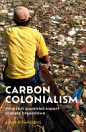
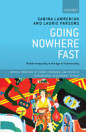
Dr Laurie Parsons is a Reader in Human Geography at Royal Holloway, University of London. His work explores the nexus of climate change and the global economy, showing how the dynamics of global production shape the unequal impact of climate and environmental change. For the last 17 years, his work has focused on the rapid environmental, economic and social changes underway in Asia, and in particular on Cambodia, where has lived for over 5 years in the last two decades, as a student, consultant and academic. During this time, he has won multiple awards for his work. In 2020, Blood Bricks was awarded the Times Higher Education Prize for Research Project of the Year, whilst in 2024, the book Carbon Colonialism: How Rich Countries Export Climate Breakdown was named AAP PROSE Economics book of the year and a CHOICE Outstanding Academic Title, 2024. His other books include Climate Change in the Global Workplace (Routledge, 2021); and Going Nowhere Fast: Inequality in the Age of Translocality (OUP, 2020).