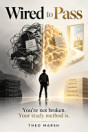
About this ebook
The savings are a little higher or a little lower. The debt is roughly what it was, in a different form. The feeling at the end of the month is identical.
And you were not reckless. There was no boat, no gambling, no crisis. A slightly better flat because the old one had damp. A car because the commute changed. Better food because you stopped having time to cook. Every step defensible. Collectively, the entire pay rise, absorbed without a decision ever being made.
You have tried budgeting. Four times. It works for about eleven days, then a week happens, and the plan and the tracking go together.
You are not bad at budgeting. Budgets require daily compliance from a person who cannot predict the month.
Inside you will discover:
The Locked Gap: one decision made once, not a discipline exercised daily
Why nobody notices a pay rise disappearing, and the three-month reset that does it
How to choose a first number you will still be running in three years
The pay rise rule: half of every increase, in the week it lands. The highest-return five minutes in this book
The forty-eight hour windfall rule, decided before the windfall arrives
The four structural reasons budgets fail, and permission to stop trying
The three purchases that actually move the gap, and the two that look big and do not
What to do the month you break it, which is not cancelling it
How to raise it with a partner as one number rather than an audit
A ninety-day sequence that is mostly one afternoon of setup
No budgeting. No tracking. No categories. No app. After the transfer, spend the remainder on whatever you like without accounting to anybody.
This book contains no financial advice. It stops at the gap. Where the money should go afterwards is a question for somebody qualified and regulated, and the book says so repeatedly.
Book Ten of The Control Line Series. Reads perfectly well on its own, and pairs with Book Nine.
Buy your copy and work out where the decade went.
Discover more
About the author
Theo Marsh writes practical philosophy for people who are good at their jobs and worn out by them. His interest in Stoicism is unromantic and entirely applied: he came to it looking for something that worked on a Tuesday afternoon, and stayed because one idea kept earning its place.
He writes short books on purpose. Each one takes a single problem, names one method for it, and stops. Every chapter ends with one action you can take the same day, because a tired reader deserves a method they can finish rather than a reading list.
His work is collected in The Control Line Series, ten books on the ordinary difficulties of competent working life: exhaustion, invisibility, perfectionism, dread, one difficult person, comparison, the career plateau, the decision you keep not making, and money you have not looked at. Each book stands alone. Read together they are one argument, made ten times on different ground: work out which part of a situation is actually yours, do that part thoroughly, and put the rest down.
He writes in British English, states the limits of each book plainly, and includes in every title a chapter explaining when it is the wrong book and where to go instead.
He is not a financial adviser, a lawyer, or a clinician, and his books contain no financial, legal or medical advice