About this ebook
If you live alone and genuinely enjoy your own company, you are intimately familiar with the subtle phenomenon known as "the drift." It starts innocently enough: a peaceful, quiet weekend at home stretches into an undisturbed week, which quietly glides into a month, until you suddenly realize you haven't exchanged a single authentic spoken sentence with another human being in days. You feel strange, slightly detached from the physical world, and uncomfortably foggy.
You love your solitude—and you have zero desire to trade it for a frantic calendar. But you also know that left completely unmanaged, healthy solitude can quietly curdle into cold, unchosen isolation.
Standard advice for people living alone fundamentally misdiagnoses this reality. Well-meaning extroverts and generic self-help books treat your quiet life as a tragic "friend deficit." Their prescription is always the same exhausting, high-friction advice: "put yourself out there," "join a local club," "say yes to everything," or "network more." For an introvert, that approach is doomed to fail because it demands massive amounts of spontaneous emotional energy, constant decision-making, and pure willpower.
Your challenge was never a lack of sociability or a shortage of friends. It is an architecture deficit. You don't need more socializing; you need a system.
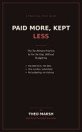
Build the Scaffold: Connection by Design for Solo Introverts: Low-Drain Systems to Protect Your Solitude and Prevent Isolation by Theo Marsh (Volume Eight of the Solo Living Systems series) is the definitive introvert social guide, solo living connection manual, and low-energy relationship blueprint engineered specifically for happily solitary adults. Bypassing forced extroversion and exhausting networking tactics, this field manual teaches you how to construct an invisible, low-friction framework of recurring connection points on how to maintain friendships as an introvert, live alone without isolation, and build low-drain social systems that run on autopilot.
The goal is not to turn you into a social butterfly or strip away your cherished quiet hours. It is to place a sensible baseline of human warmth "on rails"—so you stay anchored to the world without expending fresh energy every single week.
Inside This Low-Drain Social Architecture Blueprint:
• The Introvert Energy Economy: How to audit your social battery as a finite, physical fuel reserve—abandoning fantasy energy budgets and designing interactions that honor your actual neurological bandwidth. • The Anatomy of the Social "Scaffold": Why relying on spontaneous invitations leads directly to the drift, and how to erect two or three permanent structural struts (standing routines, recurring check-ins, and anchor environments) that hold your life without effort. • Prioritizing "Keepability" Over Ambition: Selecting connection routines so simple and low-demand that you will actually maintain them on your lowest-energy winter Tuesday—choosing quiet consistency over splashy, unsustainable plans. • The Low-Drain Calibration Matrix: How to tune the dials of every interaction to slash social fatigue:
Scale & Setting: Favoring 1-on-1 walks or quiet coffee shops over crowded dinner parties and sensory-heavy bars.
Fixed Endpoints: Establishing upfront time boundaries ("I have 45 minutes before an appointment") that eliminate the anxiety of being trapped.
Asynchronous Lifelines: Leveraging rich voice memos, running text threads, and shared photo streams for high-intimacy, near-zero-drain contact. • Securing Your Solitude (The Paradox of the Frame): Why having a reliable connection scaffold actually deepens the quality of your alone-time—permanently lifting the nagging background guilt and anxiety of the drift so you can fully surrender to pure rest. • The Monthly "Smoke Detector" Check: Why personal contentment is a notoriously poor warning system for acute isolation—and how to run a quick 5-minute monthly audit to spot relational decay, adjust loose struts, and fix lapses without shame or drama.
Who This Book Is For:
This manual is engineered specifically for introverts living alone, remote workers, creative professionals, highly sensitive persons (HSPs), single adults who cherish their independence, and neurodivergent solo dwellers, as well as anyone who wants deep, meaningful human connection without the performance and exhaustion of traditional social culture.
You never had to force yourself to become an extrovert, and you never had to surrender an hour of your treasured peace and quiet. You simply needed an intentional structure. When the scaffold is built, you are free to enjoy your solitude completely—grounded, connected, and wonderfully alone.
Build the Scaffold replaces social exhaustion and isolation drift with effortless relational design. Included within the book are references to printable energy-budget worksheets, low-drain boundary scripts, monthly maintenance checklists, and companion digital scaffold-planning templates optimized for mobile and desktop reading.
Keep your peace. Build your rails. Design a quiet life that stays warmly, safely connected to the world.
Note: This educational workbook provides personal development frameworks, lifestyle communication strategies, and social systems design for informational and self-improvement purposes. It does not provide clinical psychological therapy, psychiatric evaluation, or treatment for clinical depression or severe social anxiety disorder. If feelings of isolation are accompanied by persistent depression, numbness, or despair, please consult a licensed mental health professional.