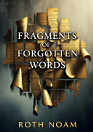
About this ebook
The city was vast, its skyline a jagged silhouette against the perpetually overcast sky. Towers of glass and steel soared upward, their windows reflecting the lives within—some filled with hope, others with secrets best left undisturbed. On the ground, people moved with purpose, eyes averted, each carrying burdens that rarely found their way into conversation. In this city, the most powerful forces were not laws or edicts, but expectations—unspoken, unwritten, and yet as binding as any decree.
Elena Morgan knew these rules well. Growing up in the maze of narrow alleyways and shadowed courtyards, she had learned early that survival depended on knowing when to speak and, more importantly, when to remain silent. To the casual observer, Elena was unremarkable—a young woman with sharp eyes and a quiet demeanor, blending into the crowds that poured through the city’s arteries. But beneath her calm exterior, she was a consummate observer, her mind cataloging every gesture, every hesitated glance, every stifled word.
Her father, a man of few words and many regrets, had taught her the value of silence. “Words can be weapons, Lena,” he would say, his voice low and gravelly from years of cigarettes and worry. “But silence? Silence is armor.” He had lived by that creed, and Elena had inherited it, wearing her quiet like a shield. In a city where trust was currency and secrets were as common as rain, it was better to let others underestimate her, to let them think she was invisible.
But invisibility had its price. Elena had spent years on the periphery of other people’s lives, watching as dreams were traded for compromise, as ambitions were smothered beneath the weight of expectation. She saw the subtle ways in which power shifted—how a single raised eyebrow could silence a room, how a whispered rumor could topple an empire built on pride. She understood the calculus of influence, the delicate balance of favors and debts that kept the city’s wheels turning.
As the rain pattered against her apartment window one October evening, Elena sat at her battered desk, the yellowed light of a single lamp casting elongated shadows across the room. The city outside was restless, the distant wail of sirens mingling with the familiar hum of traffic. She stared at the stack of papers in front of her—contracts, invoices, letters—and felt the familiar weight settle in her chest. There was a decision to be made, one that would change the trajectory of her life and, perhaps, the lives of many others.
It began, as such things often did, with a request. Not a demand, not a plea—just a simple, carefully worded message slipped under her door, bearing no signature but unmistakable in its intent. Elena knew better than to ignore such things. In this city, requests were rarely as innocent as they appeared, and debts were rarely forgiven. She read the note once, then again, committing its precise phrasing to memory.
There was no question of refusing. The rules, silent as ever, dictated her response. To refuse would be to invite scrutiny, to break the delicate balance she had spent years cultivating. So she set the note aside, her mind already working through the implications, the possible outcomes, the risks she would have to weigh. She understood that to act was to place herself in the line of fire, but to do nothing would be equally dangerous.
As she prepared to step into the night, Elena thought of her father’s warnings, of the lessons etched into her bones. She knew that the city punished those who broke its silent rules, but it also rewarded those who understood how to bend them. In the end, it was not the loudest voices that shaped fate, but those who could move unseen, who could wield silence as deftly as a blade.
The story that follows is not one of heroes or villains, but of people—flawed, complex, bound by invisible threads they could scarcely name. It is a story of choices made in shadows, of trust forged in silence, and of the quiet strength it takes to survive when the world demands nothing less. For in a city governed by silent rules, every word is a risk, and every silence holds the possibility of defiance.
Elena stepped out into the night, her footsteps echoing softly on the wet pavement. She moved with purpose, her eyes scanning the darkness for danger and opportunity alike. Somewhere in the city, a clock tolled the hour, its chime muffled by distance and rain. The world shifted around her, a tapestry of possibility and peril, and she knew that whatever came next, she would face it as she always had—quietly, resolutely, bound by the silent rules that held the city together.
But beneath the steady rhythm of her heart, a new resolve was taking shape—a sense that perhaps, just perhaps, the rules could be changed, if only one dared to question them.
About the author
Roth Noam is a writer and designer drawn to the fractures in language, identity, and power. Their work explores the unsettling spaces between states of being, often employing multilingual narratives and structural experimentation to examine themes of memory, coercion, and survival under unseen systems.
Noam’s background in both visual art and literature informs a deeply atmospheric approach to storytelling, where design and text collaborate to create immersive, disorienting experiences. Learn is their debut novel, a project born from an obsession with the dualities of voice and the silent scripts that govern our lives.
They live and work between languages.