About this ebook
The story of humanity is, in many ways, a story of movement and division. From ancient migrations to modern displacements, people have always sought new lands, safer havens, and better futures. The lines that separate “here” from “there,” “us” from “them,” have shifted and hardened, been erased and redrawn, often at great cost. Empires have risen and fallen, walls have been built and breached, and the meanings of home and exile have been inscribed upon countless lives. In this shifting landscape, borders have served as both barriers and bridges—as sites of exclusion and encounter, conflict and creativity.
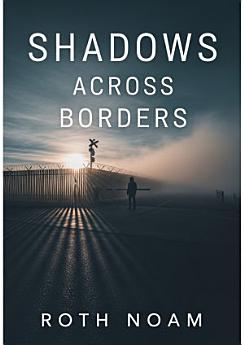
Shadows Across Borders is an exploration of the many dimensions of borders and borderlands, both literal and metaphorical. It seeks to illuminate the ways in which borders shape identity, memory, politics, and culture—and how, in turn, those who live in the shadows of borders reshape the world around them. Through history, personal narrative, political analysis, and cultural reflection, this book journeys across continents and centuries, tracing the lines that divide and the forces that connect.
The impulse to write this book was born from stories—stories of journeys taken and denied, of homes lost and found, of families separated by rivers, walls, and the invisible weight of bureaucracy. Some of these stories are personal, embedded in the migrations of my own family; others are drawn from the lives of friends, strangers, and the echoing voices of history. In each, I have found the same themes: the pain of separation, the courage of crossing, the longing for belonging, and the enduring hope that somewhere, beyond the border, a new beginning awaits.
Borders are often imagined as fixed and impersonal, but they are experienced in the flesh. A child clutching a parent’s hand in the darkness before dawn; a woman waiting at a checkpoint, documents trembling in her grasp; a man gazing across a barbed-wire fence at land he once called home—these are the human realities behind abstract lines. For many, the border is a wound that never fully heals, a reminder of what has been lost or left behind. Yet, for others, it is a site of possibility—a place where new identities are forged, new communities born, and new futures imagined.
This book is structured around a series of journeys—some physical, others emotional or intellectual. Each chapter delves into a different aspect of borders and their shadows. We begin with the historical origins of borders, tracing the evolution of territorial demarcation from the earliest city-states to the complex international boundaries of the present. We then examine the lived experiences of borderlands: the daily negotiation of identity and survival in spaces where cultures intermingle and authorities overlap.
The following chapters explore the politics of borders, from the rise of nationalism and the drawing of colonial lines to the contemporary crises of migration, refugees, and statelessness. We consider the technologies of border control—walls, surveillance, passports—and their impact on human lives. The book then turns to the cultural dimensions of borders: the art, literature, music, and cuisine that emerge in borderlands and reflect the hybridity and tension of divided spaces.
Throughout, we pay special attention to the voices of those most affected by borders: migrants and exiles, indigenous peoples, ethnic and religious minorities, and those who straddle more than one identity. Their stories challenge simplistic notions of “insider” and “outsider” and reveal the profound ambiguity and ambivalence of life at the margins. By centering these voices, we seek to move beyond the rhetoric of politicians and pundits, and toward a deeper, more compassionate understanding of what borders mean and do.
Borders are sites of power, but also of resistance. Across the world, people have found ways to subvert, transcend, and reimagine the lines that confine them. Smugglers and traders, artists and activists, dreamers and dissidents—all have used the border as a canvas for creativity and defiance. The book explores these acts of resistance, from clandestine crossings to the formation of transnational communities, from the creation of border art to the forging of new languages and solidarities.
Yet, the shadow of the border is not only cast upon those who cross or dwell near it. It reaches into the hearts of those who never leave home, shaping notions of security, belonging, and fear. Political debates about borders reveal deeper anxieties about identity, purity, and the meaning of community. In an age of globalization and digital connection, the paradox of closing borders and shrinking worlds becomes ever more acute. Technology both erases and enforces boundaries, creating new spaces of contact and new forms of exclusion.
This exploration is necessarily incomplete, for borders are always changing, always contested. New walls are built even as old ones crumble; old hatreds are rekindled even as new solidarities arise. The shadows cast by borders are lengthened by war, economic inequality, and the climate crisis, forcing millions from their homes and redrawing the map of human movement. At the same time, movements for justice, inclusion, and peace challenge us to imagine a world where borders do not mean division or loss.
The structure of the book reflects the complexity of its subject. Each chapter weaves together historical analysis, personal testimony, and cultural reflection, drawing on sources as diverse as ancient chronicles, contemporary journalism, literature, art, and oral histories. The aim is not to provide definitive answers, but to open up space for dialogue and reflection—to listen to the many voices that speak from the shadows of borders.
In the act of crossing borders—literal or metaphorical—we are confronted with questions that go to the heart of human existence: Who are we, and who are “they”? What does it mean to belong? What can be gained or lost in the act of crossing? How do we carry our memories, identities, and dreams across lines that others have drawn? How can we build bridges where others see only walls?
These questions have no easy answers. But by listening to the echoes and stories that emerge from the shadows across borders, we may find new ways of understanding ourselves and our world. We may discover that the border is not only a site of pain and loss, but also of possibility and transformation—a place where the human spirit endures, adapts, and imagines new futures.
As you embark on this journey, I invite you to look beyond the lines on the map, to listen for the voices that speak from the margins, and to reflect on the borders—visible and invisible—that shape your own life. The shadows across borders are long, but within them are stories of courage, resilience, and hope. May this book serve as both a mirror and a window: a mirror reflecting your own encounters with division and crossing, and a window onto the wider world of borderlands and the people who inhabit them.
With this, let us begin our exploration of shadows across borders—a journey through history and memory, identity and exile, loss and possibility. Let us listen to the voices that call from across the lines, and let us imagine, together, what lies on the other side.
About the author
Roth Noam is a writer and designer drawn to the fractures in language, identity, and power. Their work explores the unsettling spaces between states of being, often employing multilingual narratives and structural experimentation to examine themes of memory, coercion, and survival under unseen systems.
Noam’s background in both visual art and literature informs a deeply atmospheric approach to storytelling, where design and text collaborate to create immersive, disorienting experiences. Learn is their debut novel, a project born from an obsession with the dualities of voice and the silent scripts that govern our lives.
They live and work between languages.