About this ebook
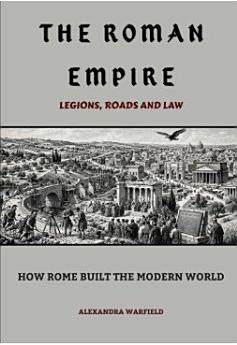
Legions, Roads and Law traces this history across twelve chapters, from the founding of Rome in 753 BC through the legions' conquest of three continents, the engineering behind the Pantheon's dome (125 AD) and the Pont du Gard aqueduct (19 BC), the legal revolution of the Twelve Tables (450 BC), the shipping network that carried 200,000 tons of grain a year from Egypt to feed a city of one million, and Constantine's adoption of Christianity in 312 AD.
Drawing on Tacitus, Livy, Cicero, and Justinian, along with archaeological evidence from Hadrian's Wall and Pompeii, the book addresses how Rome fed a million people without refrigeration or railways, how its concrete engineering went unmatched for fifteen centuries, how the legal work of jurists like Ulpian and Papinian shaped Napoleon's code, the American Constitution, and the Universal Declaration of Human Rights, and how Latin became the working language of Western science, law, and medicine for two millennia.
The book does not soften Rome's brutality: Caesar's campaigns in Gaul killed or enslaved roughly a million people between 58 and 50 BC, the Colosseum's games were built on bloodshed, and the economy depended heavily on slave labor. It argues that Rome's capacity for construction was as consequential as its capacity for destruction — and that the construction is what has endured. The Pantheon's oculus is still open to the sky.