About this ebook
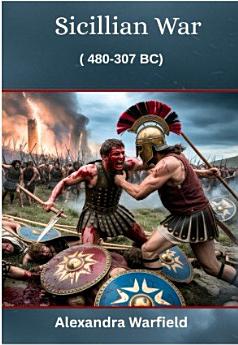
Sicilian War: 480–307 BC gives readers a precise and gripping account of a conflict that set the stage for the Punic Wars and Rome’s rise to dominance. It chronicles the fates of tyrants like Dionysius and Agathocles, the destruction of Himera and Selinus, and Pyrrhus’s failed campaign - events that redrew the political map of the Mediterranean. Based on rigorous scholarship, the book draws from primary sources and modern research to present the war in clear, human terms.
Readers will find a thorough historical study, yet told with clarity and urgency. It treats the war not just as a series of battles, but as a test of leadership, ambition, and endurance. For anyone interested in ancient power, military history, or the roots of empire, this book brings the drama and consequence of the Sicilian conflict to the forefront.
What you will learn:
A comprehensive account of nearly 200 years of continuous military, political, and cultural conflict on the island of Sicily
The strategic importance of Sicily as the fulcrum between East and West in the classical Mediterranean world
How the Battle of Himera in 480 BC and the Athenian expedition in 415 BC paralleled other watershed conflicts like Thermopylae and the Peloponnesian War
The rise and fall of local tyrants such as Gelon, Theron, Dionysius I, Agathocles, and how their rule reshaped Greek warfare and governance
The evolution of Carthaginian military doctrine, siege technology, and alliances with native Sicilian populations
The unique strategic decision by Agathocles to invade North Africa, a campaign that prefigured the later Punic Wars
The intervention of Pyrrhus of Epirus in Sicilian affairs and how his failure reflected deeper issues in pan-Hellenic politics
The first signs of Roman interest in Sicilian affairs and how the island served as a prelude to Rome’s imperial expansion
How Greek, Punic, and Roman military systems were tested and refined through repeated conflict on Sicilian soil
The transition of Sicily from contested territory to Rome’s first overseas province and its role in the formation of Roman provincial governance
An analysis of how repeated wars shaped Sicilian urban planning, fortifications, and political culture
Why Sicily became a repeated “graveyard of empires” -a place where military ambition collided with the complexities of local politics and fragile alliances
A scholarly, yet accessible treatment of Sicily’s historical memory in ancient sources such as Diodorus Siculus, Polybius, and Plutarch
Clear and carefully written military analysis of key battles, alliances, and turning points for students, scholars, and informed general readers