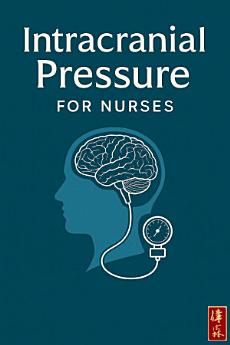
Intracranial Pressure for Nurses
About this ebook
Raised ICP is not a mystery. It is a sequence of physiological events that can be understood clearly, logically, and without fear. When nurses grasp these principles, they begin to see patterns that were previously hidden: the meaning behind a subtle change in behaviour, the significance of a drifting blood pressure, the quiet warning in a new breathing pattern. They begin to understand why certain postoperative patients require higher blood pressure targets, why CO₂ must be controlled, and why deterioration can occur even when the monitor appears reassuring.
The purpose of this booklet is simple: to give nurses the clarity they need to protect the brain.
Every section is written with the bedside nurse in mind — the one who stands closest to the patient, who observes the earliest changes, and who often carries the responsibility of recognizing deterioration before it becomes irreversible. The explanations are straightforward, the physiology is connected directly to clinical practice, and the emphasis is always on understanding rather than memorization.
Throughout the booklet, one reminder appears repeatedly:
“The silent danger: ‘normal’ vital signs can conceal — and even accelerate — a deteriorating brain.”
This is not a slogan. It is a truth learned at the bedside, sometimes painfully. It is a reminder that neurological nursing requires vigilance, context, and a willingness to look beyond the numbers.
If this booklet helps a nurse pause, reconsider, and act early — if it prevents even one silent deterioration — then it has served its purpose.
Discover more
Ratings and reviews
About the author
Wei Lin is a contemplative man and lifelong seeker. Now in his seventies, he has long since passed the age of recklessness. Formerly employed in the service industry, he understands the mundane realities of life yet recognizes the pure light within the heart. His hospital experience shaped his understanding of suffering, vigilance, and the quiet heroism of nurses.
In the 1980s, he briefly took monastic vows, observing the Eight Precepts and studying under Masters Baodeng, Jinshan, and Zhifan. His character remains unconventional — a free-spirited wanderer who dwells with his wife and daughter, walks with dogs, and finds companionship in half the Analects, guidance in Buddhist verses, and a mirror for the heart in chapters of military strategy.
Though his life is stable and his family harmonious, he delights in the company of ancient sages, finding solace in classical texts and inspiration without barriers. His thoughts know no fixed rules, and his writing reflects a mind that navigates its remaining years without growing old.
This booklet is one of many distillations — not just of clinical knowledge, but of a life spent listening, watching, and walking slowly through the world.