About this ebook
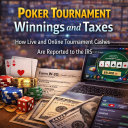
One of the most common traps: the net winnings vs. gross winnings problem. Most bettors think about their bottom line — total wins minus total losses. But the IRS doesn't automatically see it that way. Understanding how income is calculated, when platforms issue W-2G forms versus 1099s, and when you owe tax even without a form is critical.
This guide explains the $600 / 300-to-1 odds threshold for sports betting W-2G forms, why most sports bets never trigger automatic reporting even on big wins, and exactly where to download your tax documents on each major platform. You'll also get a clear breakdown of loss deduction rules and a real-world worked example showing what $10,000 in wins and $8,500 in losses actually costs.
If you bet on sports and you're in the US, this guide answers every tax question you've been wondering about.
WHAT READERS WILL LEARN
How sports betting income is taxed at the federal level — it's ordinary income, same as wages
The W-2G threshold for sportsbooks — the $600 rule and 300-to-1 odds requirement explained clearly
What DraftKings reports to the IRS — thresholds, 1099-MISC vs. W-2G, and where to find your tax documents
What FanDuel reports — their net winnings calculation, reporting timeline, and tax center walkthrough
How to report betting income when you have no form — the self-reporting obligation and how to use your betting history exports
How to deduct betting losses — with a worked real-money example and the itemizing reality
Discover more
About the author
The author is the editor of casinoonlinegaming.com greenbaycasino.com and slotbonuses.info, where they publish educational articles analyzing casino games from a mathematical and probabilistic perspective. That work focuses on game structure, probability, and common misconceptions rather than betting advice, systems, or strategies.
Writing under the Games Explained Honestly imprint, the author specializes in clear, probability-first explanations of casino games and gambling mechanics. Rather than offering methods to win or promises of outcomes, the work examines how games are designed, how probabilities are fixed, and why player experience often conflicts with mathematical reality.
The books in this series draw on publicly available information, standard principles of probability, and established concepts from game design and behavioral psychology. They are written for readers who want understanding instead of folklore, clarity instead of illusion, and explanations grounded in structure rather than belief.
The author does not provide legal advice, gambling advice, financial advice, or recommendations. All content is educational in nature and intended to help readers better interpret chance-based games and their own experiences with them.