About this ebook
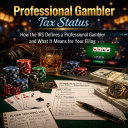
This guide settles the question. The IRS position on gambling bonuses, how free bet payouts work from a tax perspective (you keep only the winnings, not the stake), when a deposit match becomes taxable real money, and how to track bonus conversions accurately across DraftKings, FanDuel, BetMGM, and Caesars are all covered in plain language.
Casino welcome bonuses and free spins come with their own nuances too. When do free spin wins become taxable? What does the wagering requirement have to do with it? This guide draws the line clearly so you know exactly when bonus money crosses into reportable income — and when it doesn't.
No speculation, no vague "it depends." Just clear answers to the bonus tax questions that players actually ask.
WHAT READERS WILL LEARN
The IRS position on gambling bonuses — when they count as income and when they don't
How free bet payouts are taxed — only the winnings are taxable, not the free bet stake itself
When deposit match bonuses become taxable — the withdrawal and playthrough connection explained
How free spin wins are treated once they're converted to a real-money balance after wagering requirements
Why bonus wins rarely trigger W-2G forms — and what that means for your self-reporting obligation
A simple bonus tracking system that separates bonus-derived income from regular gambling income
Discover more
About the author
The author is the editor of casinoonlinegaming.com greenbaycasino.com and slotbonuses.info, where they publish educational articles analyzing casino games from a mathematical and probabilistic perspective. That work focuses on game structure, probability, and common misconceptions rather than betting advice, systems, or strategies.
Writing under the Games Explained Honestly imprint, the author specializes in clear, probability-first explanations of casino games and gambling mechanics. Rather than offering methods to win or promises of outcomes, the work examines how games are designed, how probabilities are fixed, and why player experience often conflicts with mathematical reality.
The books in this series draw on publicly available information, standard principles of probability, and established concepts from game design and behavioral psychology. They are written for readers who want understanding instead of folklore, clarity instead of illusion, and explanations grounded in structure rather than belief.
The author does not provide legal advice, gambling advice, financial advice, or recommendations. All content is educational in nature and intended to help readers better interpret chance-based games and their own experiences with them.