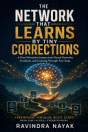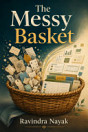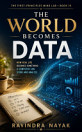
About this ebook
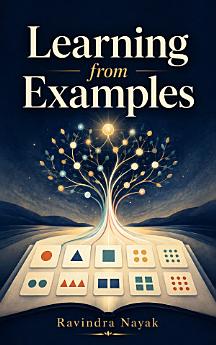
Ravindra Nayak builds the answer from first principles for readers who want genuine understanding without being pushed into technical jargon before the ideas make sense. A button-sorting game becomes a doorway into supervised learning. A practice sheet explains why training performance is not the same as real-world ability. Adjustable thresholds make parameters visible. Unseen examples reveal the difference between memorization and generalization. Error becomes information rather than a verdict.
Step by step, the book develops the foundations behind modern machine learning: examples, features, labels, training, validation and test sets, parameters, thresholds, regression intuition, loss, overfitting, underfitting, data leakage, noisy labels, rare cases, shortcut learning, representation choices, model capacity, regularization, learning rate intuition, batches, repeated passes, early stopping, changing data, human supervision, and different sources of learning signals.
The mathematics appears only when it earns its place. Ratios, simple accuracy, error counts, thresholds, residuals, averages, and small numerical examples are introduced in ordinary language and connected to situations the reader can picture. Coding is not required to own the core reasoning.
Dialogue, physical experiments, mind maps, counterexamples, field cards, retrieval challenges, and the final Value Edition turn the material into an active learning experience. The SCRATCH Loop gives readers a reusable method for facing unfamiliar machine-learning problems: State the question, Collect examples, Represent what matters, Aim at a useful target, Train through adjustment, Challenge the lesson on the unseen, then Hold, revise, escalate, or stop.
Learning from Examples is for curious adults, students, professionals, educators, and non-technical readers who want to understand what machine learning is actually doing beneath the vocabulary. The goal is not to make the technology look simple. It is to make the reasoning visible enough that the reader can ask better questions, recognize fragile claims, and keep learning with confidence.
Discover more
About the author
Ravindra Nayak writes accessible, first-principles books for readers who want to understand complex ideas without being overwhelmed by technical language. His work brings together clear explanation, natural dialogue, practical exercises, visual thinking, and reflective problem solving so that knowledge can become useful in everyday life. Through The First-Principles Mind Lab, he builds technical confidence one layer at a time, beginning with ordinary questions and leading readers toward modern computing and artificial-intelligence concepts without skipping the reasoning underneath.