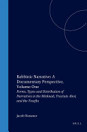
Rabbinic Narrative: A Documentary Perspective, Volume Three: Forms, Types and Distribution of Narratives in Song of Songs Rabbah and Lamentations Rabbah and a Reprise of Fathers According to Rabbi Nathan Text A
2021-ж. ноя. · BRILL
Электрондук китеп
336
Барактар
Куралдар
info
Учкай маалымат
Each Rabbinic document, from the Mishnah through the Bavli, defines itself by a unique combination of indicative traits of rhetoric, topic, and particular logic that governs its coherent discourse. But narratives in the same canonical compilations do not conform to the documentary indicators that govern in these compilations, respectively. They form an anomaly for the documentary reading of the Rabbinic canon of the formative age.
To remove that anomaly, this project classifies the types and forms of narratives and shows that particular documents exhibit distinctive preferences among those types. This detailed, systematic classification of Rabbinic narrative supplies these facts concerning the classification of narratives and their regularities: [1] what are the types and forms of narrative in a given document? [2] how are these distinctive types and forms of narrative distributed across the canonical documents of the formative age, the first six centuries C.E.?
The answers for the documentary preferences are in Volumes One through Three, for the Mishnah-Tosefta, the Tannaite Midrash-compilations, and Rabbah-Midrash-compilations, respectively. Volume Four then sets forth the documentary history of each of the types of Rabbinic narrative, including the authentic narrative, the ma'aseh and the mashal. How the traits of the several types of narratives shift as the respective types move from document to document is spelled out in complete detail. This project opens an entirely new road toward the documentary analysis of Rabbinic narrative. It fills out an important chapter in the documentary hypothesis of the Rabbinic canon in the formative age.
Each Rabbinic document, from the Mishnah through the Bavli, defines itself by a unique combination of indicative traits of rhetoric, topic, and particular logic that governs its coherent discourse. But narratives in the same canonical compilations do not conform to the documentary indicators that...
Дагы башкалар
Автор жөнүндө
Jacob Neusner is Research Professor of Religion and Theology at Bard College, Annandale-on-Hudson, New York, a Life Member of Clare Hall, Cambridge University, and a Member of the Institute for Advanced Study in Princeton NJ.
Jacob Neusner is Research Professor of Religion and Theology at Bard College, Annandale-on-Hudson, New York, a Life Member of Clare Hall, Cambridge University, and a Member of the Institute for Advanced Study in Princeton NJ.
Бул электрондук китепти баалаңыз
Оюңуз менен бөлүшүп коюңуз.
Окуу маалыматы
Смартфондор жана планшеттер
Android жана iPad/iPhone үчүн Google Play Китептер колдонмосун орнотуңуз. Ал автоматтык түрдө аккаунтуңуз менен шайкештелип, кайда болбоңуз, онлайнда же оффлайнда окуу мүмкүнчүлүгүн берет.
Ноутбуктар жана компьютерлер
Google Play'ден сатылып алынган аудиокитептерди компьютериңиздин веб браузеринен уга аласыз.
eReaders жана башка түзмөктөр
Kobo eReaders сыяктуу электрондук сыя түзмөктөрүнөн окуу үчүн, файлды жүктөп алып, аны түзмөгүңүзгө өткөрүшүңүз керек. Файлдарды колдоого алынган eReaders'ке өткөрүү үчүн Жардам борборунун нускамаларын аткарыңыз.