Deep Utopia: Life and Meaning in a Solved World
Mar 2024 · Sold by Simon and Schuster
Ebook
536
Pages
family_home
Eligible
info
About this ebook
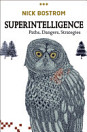
Bostrom’s last book, Superintelligence: Paths, Dangers, Strategies (OUP, 2014), sparked a global conversation on AI that continues and widens to this day. That book, which despite its academic style became a New York Times bestseller, focused on what would happen if AI goes wrong.
But what if AI goes right? Suppose we succeed in developing superintelligence safely and that we make good use of the almost magical powers this unlocks. We would then achieve full unemployment. More than that, we would transition into a “post-instrumental condition," in which human effort is not needed for any practical purpose. This would be a condition of material abundance. Human nature itself would become fully malleable.
In such a solved world, what would be the point of human existence? What could give meaning to our lives? Which old values will we have to sacrifice, and which new values will we be able to realize to wonderful degrees?
Deep Utopia—a work that is again years ahead of its time—takes the readers on a journey into some of the most profound questions that arise as we dissolve the limits of our current mode of being. It is a lush, playful, difficult, and human text that interleaves fiction stories and philosophical lectures that show us a glimpse of a different kind of existence–one that might be ours in the not-so-distant future.
Winner of 7 Book Awards!
2024 AMERICAN LEGACY BOOK AWARDS WINNER
2024 LIVING NOW BOOK AWARD EVERGREEN GOLD MEDAL WINNER
2024 PENCRAFT BOOK AWARDS 1ST PLACE WINNER
But what if AI goes right? Suppose we succeed in developing superintelligence safely and that we make good use of the almost magical powers this unlocks. We would then achieve full unemployment. More than that, we would transition into a “post-instrumental condition," in which human effort is not needed for any practical purpose. This would be a condition of material abundance. Human nature itself would become fully malleable.
In such a solved world, what would be the point of human existence? What could give meaning to our lives? Which old values will we have to sacrifice, and which new values will we be able to realize to wonderful degrees?
Deep Utopia—a work that is again years ahead of its time—takes the readers on a journey into some of the most profound questions that arise as we dissolve the limits of our current mode of being. It is a lush, playful, difficult, and human text that interleaves fiction stories and philosophical lectures that show us a glimpse of a different kind of existence–one that might be ours in the not-so-distant future.
Winner of 7 Book Awards!
2024 AMERICAN LEGACY BOOK AWARDS WINNER
2024 LIVING NOW BOOK AWARD EVERGREEN GOLD MEDAL WINNER
2024 PENCRAFT BOOK AWARDS 1ST PLACE WINNER
Bostrom’s last book, Superintelligence: Paths, Dangers, Strategies (OUP, 2014), sparked a global conversation on AI that continues and widens to this day. That book, which despite its academic style became a New York Times bestseller, focused on what would happen if AI goes wrong.
But what if AI...
Discover more
About the author
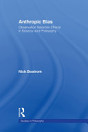
NICK BOSTROM is a Professor at Oxford University, where he is the founding director of the Future of Humanity Institute. Bostrom is the world’s most cited philosopher aged 50 or under. He is the author of more than 200 publications, including Anthropic Bias (2002), Global Catastrophic Risks (2008), Human Enhancement (2009), and Superintelligence: Paths, Dangers, Strategies (2014), a New York Times bestseller which sparked a global conversation about the future of AI. His work has pioneered many of the ideas that frame current thinking about humanity’s future (such as the concept of an existential risk, the simulation argument, the vulnerable world hypothesis, the unilateralist’s curse, etc.), while some of his recent work concerns the moral status of digital minds. His writings have been translated into more than 30 languages; he is a repeat main-stage TED speaker; and he has been interviewed more than 1,000 times by media outlets around the world. He has been on Foreign Policy’s Top 100 Global Thinkers list twice and was included in Prospect’s World Thinkers list, the youngest person in the top 15. He has an academic background in theoretical physics, AI, and computational neuroscience as well as philosophy.
NICK BOSTROM is a Professor at Oxford University, where he is the founding director of the Future of Humanity Institute. Bostrom is the world’s most cited philosopher aged 50 or under. He is the author of more than 200 publications, including Anthropic Bias (2002), Global Catastrophic Risks (20...
Rate this ebook
Tell us what you think.
Reading information
Smartphones and tablets
Install the Google Play Books app for Android and iPad/iPhone. It syncs automatically with your account and allows you to read online or offline wherever you are.
Laptops and computers
You can listen to audiobooks purchased on Google Play using your computer's web browser.
eReaders and other devices
To read on e-ink devices like Kobo eReaders, you'll need to download a file and transfer it to your device. Follow the detailed Help Center instructions to transfer the files to supported eReaders.