About this ebook
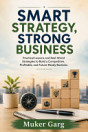
The Winning Business Strategy Winning in business is not simply about having a great product, working harder, or growing faster than everyone else. Sustainable success comes from making the right strategic choices, understanding customers deeply, building meaningful advantages, managing resources intelligently, and executing consistently. The Winning Business Strategy explores the principles that can help entrepreneurs, founders, business owners, managers, and aspiring leaders build companies capable of competing effectively and creating lasting value. Every business operates in an environment of competition and uncertainty. Customers change. Competitors improve. Technology evolves. Costs fluctuate. New opportunities appear. Old strategies stop working. A business that depends entirely on yesterday's success can quickly fall behind. Winning therefore requires more than a good plan. It requires strategic thinking. Strategy determines where a business will compete, which customers it will serve, what value it will create, how it will differentiate itself, and where it will invest its limited resources. The journey begins with clarity. Before a company can win, it needs to understand what winning actually means. Is the goal greater profitability? Market leadership? Customer loyalty? Expansion? Brand recognition? Innovation? Long-term stability? Without a clear definition of success, businesses can chase numbers without building real strength. **The Winning Business Strategy** encourages leaders to establish clear objectives and connect them to practical decisions. Customer understanding is at the center of every winning strategy. Businesses do not succeed simply because they create products. They succeed because customers recognize value in those products and choose to spend their money with the company. Understanding customers requires going beyond basic demographics. Businesses need to understand customer problems, motivations, frustrations, expectations, purchasing behavior, and changing needs. Why do customers choose you? Why do they choose competitors? Why do they stay? Why do they leave? What would make them willing to pay more? What problems remain unsolved? These questions can reveal opportunities that competitors overlook. Customer feedback becomes strategic information. Complaints can identify weaknesses. Repeat purchases can reveal value. Referrals can demonstrate trust. Changing behavior can reveal emerging markets. The strongest businesses continuously listen. A winning business also needs a strong value proposition. Customers have choices. They can compare prices, features, quality, service, convenience, reputation, and experiences. A business therefore needs a clear reason to be chosen. That reason might be exceptional quality. It might be speed. It might be specialization. It might be convenience. It might be technology. It might be service. It might be trust. It might be a unique customer experience. The objective is not to be better at everything. The objective is to become exceptionally valuable in areas that matter to the target customer. Differentiation creates strategic space. Competition is unavoidable, but competing everywhere is unnecessary. Strong businesses understand where they have an advantage and build around it. A company may not have the largest budget, biggest team, or most recognizable brand. But it can still win through focus, speed, expertise, customer relationships, innovation, or operational excellence. **The Winning Business Strategy** explores how entrepreneurs can identify their strongest competitive advantages and turn them into sustainable strengths. Strategic focus is another critical element. Entrepreneurs often see opportunities everywhere. A new product looks attractive. A new market appears promising. A new partnership creates excitement. A competitor launches something interesting. A new technology seems impossible to ignore. But every opportunity has a cost. Time spent on one project cannot be spent on another. Money invested in one market cannot be invested elsewhere. Management attention cannot be divided infinitely. Winning businesses therefore learn to prioritize. They ask: Does this opportunity fit our strengths? Will it create meaningful customer value? Can we execute effectively? What resources will it require? What risks does it create? Will it strengthen our long-term position? Sometimes the most strategic decision is saying no. Financial discipline is another foundation of winning businesses. Revenue is important, but revenue alone does not define success. A company can generate impressive sales while producing weak profits. It can grow rapidly while consuming too much cash. It can attract customers while spending more to acquire them than those customers are worth. Winning requires understanding the economics behind growth. Leaders need to understand pricing, margins, operating expenses, customer acquisition costs, retention, cash flow, profitability, and return on investment. Financial information should influence strategy. Sometimes the best opportunity is not selling more. It may be improving pricing. Reducing waste. Increasing retention. Improving productivity. Focusing on higher-value customers. Or eliminating activities that consume resources without producing sufficient returns. A strong strategy connects financial discipline with business growth. Execution is where strategy becomes real. Many businesses have ambitious plans. Fewer execute them consistently. A strategy can fail because employees do not understand the priorities. Responsibilities may be unclear. Progress may not be measured. Leaders may change direction too frequently. Teams may become distracted by urgent but low-value activities. Winning requires execution discipline. People need to know what matters. They need to understand who owns each responsibility. They need measurable objectives. They need feedback. They need accountability. They need the resources required to perform. **The Winning Business Strategy** explores how businesses can translate strategic goals into practical execution through clear priorities, measurable outcomes, effective communication, and consistent review. People are another major source of competitive advantage. Products can be copied. Technology can be purchased. Marketing methods can be imitated. But a strong team can become extremely difficult to replicate. The right people bring knowledge, creativity, relationships, judgment, and energy. Building that team requires more than hiring. Businesses need training. They need leadership. They need accountability. They need trust. They need a culture that encourages ownership. As the company grows, the founder must also learn to delegate. A business cannot move faster than its founder if every important decision depends on one person. Delegation creates organizational capacity. It allows capable employees and managers to make decisions, solve problems, and take responsibility for results. The founder's role gradually changes from being the person who does everything to becoming the person who builds an organization capable of doing more. Systems support this transition. A winning business cannot rely entirely on memory, informal communication, or individual heroics. Processes need to become repeatable. Responsibilities need to be clear. Information needs to be accessible. Technology should reduce unnecessary work. Automation can improve efficiency. Documentation can preserve knowledge. Measurement can reveal performance. Strong systems allow the business to deliver consistent results even as complexity increases. But systems should serve people and customers rather than create unnecessary bureaucracy. The purpose is simple: Make good performance easier to repeat. Marketing and sales are also central to the strategy. A business cannot win if customers never discover it. Marketing must communicate value clearly and consistently. Sales must convert interest into action. Customer experience must turn purchases into relationships. The strongest companies understand their customer-acquisition channels and measure their performance. They know where customers come from. They understand acquisition costs. They measure conversion. They track retention. They identify what encourages repeat purchases. This creates a predictable growth engine. Customer retention can become especially powerful. A customer who returns represents more than another sale. They can become a loyal supporter, repeat buyer, source of feedback, and referral opportunity. Winning businesses therefore focus not only on acquiring customers but on becoming worth returning to. Innovation is another essential component of long-term strategy. No market remains static. Technology changes. Customer expectations evolve. Competitors improve. New business models appear. A company that stops learning can eventually lose its advantage. Innovation does not always mean inventing something revolutionary. It can mean improving an existing product. Simplifying a process. Creating a better customer experience. Changing pricing. Improving distribution. Using technology more effectively. Finding a better way to solve an old problem. The best innovation creates meaningful value. Adaptability allows businesses to continue improving when conditions change. A winning strategy is not a rigid document. It is a framework. The destination may remain clear while the path changes. Strong businesses monitor the market, listen to customers, study competitors, analyze results, and adjust when evidence shows that something needs to change. Adaptability does not mean constantly changing direction. It means knowing what must remain stable and what should evolve. Risk management is another important part of winning. Every major business decision contains uncertainty. New products can fail. New markets can disappoint. Investments can lose money. Hiring decisions can go wro
The Winning Business Strategy Winning in business is not simply about having a great product, working harder, or growing faster than everyone else. Sustainable success comes from making the right strategic choices, understanding customers deeply, building meaningful advantages, managing resources...
Discover more
About the author
Muker Garg is a creative professional and author. Through his writing, he shares practical insights on business growth, strategy, creativity, and personal development, helping readers turn ideas into meaningful action and long-term success.
Muker Garg is a creative professional and author. Through his writing, he shares practical insights on business growth, strategy, creativity, and personal development, helping readers turn ideas into meaningful action and long-term success.
Rate this ebook
Tell us what you think.
Reading information
Smartphones and tablets
Install the Google Play Books app for Android and iPad/iPhone. It syncs automatically with your account and allows you to read online or offline wherever you are.
Laptops and computers
You can listen to audiobooks purchased on Google Play using your computer's web browser.
eReaders and other devices
To read on e-ink devices like Kobo eReaders, you'll need to download a file and transfer it to your device. Follow the detailed Help Center instructions to transfer the files to supported eReaders.