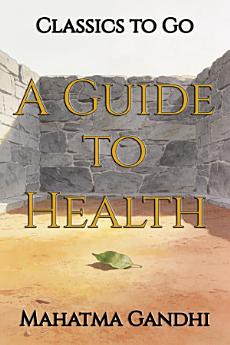
A Guide to Health: Restored Classics to Go Edition
About this ebook
Discover more
About the author
Mohandas Karamchand Gandhi, better known as Mahatma Gandhi, was born in 1869 in Porbandar, India, and came of age during a period of deep colonial inequality that would shape his lifelong commitment to justice. Trained in law in London and later transformed by his experiences in South Africa, he developed the philosophy of nonviolent resistance that became central to India's struggle for independence and an enduring model for civil rights movements around the world. Alongside his political leadership, Gandhi wrote extensively on ethics, self-discipline, social reform, spirituality, and practical living, including thoughtful work on health, simplicity, and the discipline of the body and mind. His writing consistently returns to themes of truth, nonviolence, moral courage, self-restraint, and the belief that personal change and social change are inseparable. These ideas remain strikingly relevant today in a world still marked by conflict, inequality, and the search for principled leadership. Gandhi's legacy lies not only in his role as a national leader but in his insistence that conscience, compassion, and disciplined action can challenge injustice without surrendering humanity. Readers who are drawn to political thought, spiritual reflection, social reform, or practical wisdom about living simply and well will find his work especially rewarding.