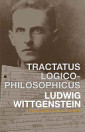
Tractatus Logico-philosophicus

· Binker North
22 reviews
Ebook
189
Pages

About this ebook

The Tractatus Logico-Philosophicus (widely abbreviated and cited as TLP) (Latin for Logical Philosophical Treatise or Treatise on Logic and Philosophy) is the only book-length philosophical work by the Austrian philosopher Ludwig Wittgenstein that was published during his lifetime. The project had a broad goal: to identify the relationship between language and reality and to define the limits of science. It is recognized by philosophers as a significant philosophical work of the twentieth century. G. E. Moore originally suggested the work's Latin title as homage to the Tractatus Theologico-Politicus by Baruch Spinoza.

Wittgenstein wrote the notes for the Tractatus while he was a soldier during World War I and completed it during a military leave in the summer of 1918. It was first published in German in 1921 as Logisch-Philosophische Abhandlung. The Tractatus was influential chiefly amongst the logical positivist philosophers of the Vienna Circle, such as Rudolf Carnap and Friedrich Waismann. Bertrand Russell's article "The Philosophy of Logical Atomism" is presented as a working out of ideas that he had learned from Wittgenstein.

The Tractatus employs an austere and succinct literary style. The work contains almost no arguments as such, but rather consists of declarative statements, or passages, that are meant to be self-evident. The statements are hierarchically numbered, with seven basic propositions at the primary level (numbered 1-7), with each sub-level being a comment on or elaboration of the statement at the next higher level (e.g., 1, 1.1, 1.11, 1.12, 1.13). In all, the Tractatus comprises 526 numbered statements.

Wittgenstein's later works, notably the posthumously published Philosophical Investigations, criticised many of his earlier ideas in the Tractatus.

The Tractatus Logico-Philosophicus (widely abbreviated and cited as TLP) (Latin for Logical Philosophical Treatise or Treatise on Logic and Philosophy) is the only book-length philosophical work by the Austrian philosopher Ludwig Wittgenstein that was published during his lifetime. The project ha...

Ratings and reviews

22 reviews
A Google user
May 6, 2012
This is not a review, you don't "review" great works of literature. That being said, this is a creepy little book that evinces Wittgenstein's obsessive genius. It's quite entertaining and, should you have nothing to do, will probably keep you occupied many days to come. Students of Wittgenstein should at least work through this before reading "Philosophical Investigations". If you read PI and thought it was easy but think TLP is hard you never read PI the right way. Learn this conception of language first before trying to "cure yourself" of philosophy.
Did you find this helpful?
A Google user
October 6, 2011
I find it actually pretty embarrassing that the average person gave this book only three and a half stars. It is, without a doubt, one of the most significant and influential works in analytic philosophy. It is extremely difficult to understand - even philosophical giants like Russell and Carnap did not fully appreciate the theory Wittgenstein lays out. However, if you toil through slowly and carefully, the result is well worth the effort. Wittgenstein paints a beautiful metaphysical picture that he interweaves with an original philosophy of language. His theory solves philosophical problems (most notably the Russell paradox) that many other theories still grapple with. He introduces the notion of truth tables - something that is now taught in every course on introductory propositional logic in the world. As with anything in philosophy, this theory faces certain problems. However, one's understanding of philosophy is extended to such a great extent by examining this work that I cannot possibly recommend it highly enough.
Did you find this helpful?
Andrew Lowe
February 16, 2023
"original pages, original manuscript," along with any of the-then side notes, checks, underlines, quips...excellent.
Did you find this helpful?

About the author

Ludwig Josef Johann Wittgenstein (26 April 1889 - 29 April 1951) was an Austrian-British philosopher who worked primarily in logic, the philosophy of mathematics, the philosophy of mind, and the philosophy of language.[12] From 1929 to 1947, Wittgenstein taught at the University of Cambridge.[13] During his lifetime he published just one slim book (the 75-page Tractatus Logico-Philosophicus, 1921), one article (Some Remarks on Logical Form, 1929), one book review and a children's dictionary.[14][15] His voluminous manuscripts were edited and published posthumously. Philosophical Investigations appeared as a book in 1953. His teacher, Bertrand Russell, described Wittgenstein as perhaps the most perfect example I have ever known of genius as traditionally conceived; passionate, profound, intense, and dominating.[16] Born in Vienna into one of Europe's richest families, he inherited a fortune from his father in 1913. He initially made some donations to artists and writers, and then, in a period of severe personal depression after the First World War, he gave away his entire fortune to his brothers and sisters.[17][18] Three of his four brothers committed suicide, which Wittgenstein had also contemplated. He left academia several times-serving as an officer on the front line during World War I, where he was decorated a number of times for his courage; teaching in schools in remote Austrian villages where he encountered controversy for hitting children when they made mistakes in mathematics; and working as a hospital porter during World War II in London, where he told patients not to take the drugs they were prescribed while largely managing to keep secret the fact that he was one of the world's most famous philosophers. His philosophy is often divided into an early period, exemplified by the Tractatus, and a later period, articulated in the Philosophical Investigations.[19] Early Wittgenstein was concerned with the logical relationship between propositions and the world and he believed that by providing an account of the logic underlying this relationship, he had solved all philosophical problems. Late Wittgenstein, however, rejected many of the assumptions of the Tractatus, arguing that the meaning of words is best understood as their use within a given language-game.[20] A survey among American university and college teachers ranked the Investigations as the most important book of 20th-century philosophy, standing out as the one crossover masterpiece in twentieth-century philosophy, appealing across diverse specializations and philosophical orientations.The Investigations also ranked 54th on a list of most influential twentieth-century works in cognitive science prepared by the University of Minnesota's Center for Cognitive Sciences.[21] However, in the words of his friend Georg Henrik von Wright, he believed that his ideas were generally misunderstood and distorted even by those who professed to be his disciples. He doubted he would be better understood in the future. He once said he felt as though he was writing for people who would think in a different way, breathe a different air of life, from that of present-day men
Ludwig Josef Johann Wittgenstein (26 April 1889 - 29 April 1951) was an Austrian-British philosopher who worked primarily in logic, the philosophy of mathematics, the philosophy of mind, and the philosophy of language.[12] From 1929 to 1947, Wittgenstein taught at the University of Cambridge.[13]...

Rate this ebook

Tell us what you think.

Reading information

Smartphones and tablets
Install the Google Play Books app for Android and iPad/iPhone. It syncs automatically with your account and allows you to read online or offline wherever you are.
Laptops and computers
You can listen to audiobooks purchased on Google Play using your computer's web browser.
eReaders and other devices
To read on e-ink devices like Kobo eReaders, you'll need to download a file and transfer it to your device. Follow the detailed Help Center instructions to transfer the files to supported eReaders.