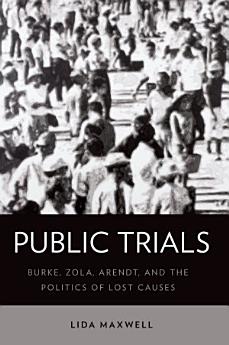
Public Trials: Burke, Zola, Arendt, and the Politics of Lost Causes
Nov 2014 · Oxford University Press
Ebook
240
Pages
family_home
Eligible
info
About this ebook
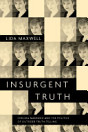
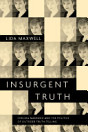
There are certain moments, such as the American founding or the Civil Rights Movement, that we revisit again and again as instances of democratic triumph, and there are other moments that haunt us as instances of democratic failure. How should we view moments of democratic failure, when both the law and citizens forsake justice? Do such moments reveal a wholesale failure of democracy or a more contested failing, pointing to what could have been, and still might be? Public Trials reveals the considerable stakes of how we understand democratic failure. Maxwell argues against a tendency in the thinking of Plato, Rousseau and contemporary theorists to view moments of democratic failure as indicative of the failure of democracy, insomuch as such thinking leads to a deference to authority that unintentionally encourages complicity in elite and legal failures to assure justice. In contrast, what Maxwell calls "lost cause narratives" of democratic failure reveal the contingency of democratic failure by showing that things "could have been" otherwise -- and, with public action and response, might yet be. A politics of lost causes calls for democratic responsiveness to failure via practices of resistance, theatrical claims-making, and re-narration. Maxwell makes a powerful case for the politics of lost causes by examining public controversies over trials. She focuses on the dilemmas and diagnoses of democratic failure in four instances: Edmund Burke's speeches and writings on the Warren Hastings trial in late 18th century Britain, Emile Zola's writings on the Dreyfus Affair in late 19th century France, Hannah Arendt's writings on the Eichmann trial in 1960's Israel, and Kathryn Bigelow's recent narration of (the lack of) trials of alleged terrorist detainees in Zero Dark Thirty. Maxwell marshals her subtle, historically grounded readings of these texts to show the dangers of despairing of democracy altogether, as well as the necessity of re-narrating instances of democratic failure so as to cultivate public responsiveness to such failures in the future.
There are certain moments, such as the American founding or the Civil Rights Movement, that we revisit again and again as instances of democratic triumph, and there are other moments that haunt us as instances of democratic failure. How should we view moments of democratic failure, when both the ...
Discover more
About the author
Lida Maxwell is Assistant Professor of Political Science at Trinity College in Hartford, Connecticut.
Lida Maxwell is Assistant Professor of Political Science at Trinity College in Hartford, Connecticut.
Rate this ebook
Tell us what you think.
Reading information
Smartphones and tablets
Install the Google Play Books app for Android and iPad/iPhone. It syncs automatically with your account and allows you to read online or offline wherever you are.
Laptops and computers
You can listen to audiobooks purchased on Google Play using your computer's web browser.
eReaders and other devices
To read on e-ink devices like Kobo eReaders, you'll need to download a file and transfer it to your device. Follow the detailed Help Center instructions to transfer the files to supported eReaders.