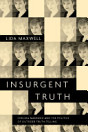
Insurgent Truth: Chelsea Manning and the Politics of Outsider Truth-Telling
May 2019 · Oxford University Press
star
1 review
Ebook
224
Pages
family_home
Eligible
info
About this ebook
When Chelsea Manning was arrested in May 2010 for leaking massive amounts of classified Army and diplomatic documents to WikiLeaks, she was almost immediately profiled by the mainstream press as a troubled person: someone who had experienced harassment due to her sexual orientation and gender non-conformity, and who leaked documents not on behalf of the public good, but out of motives of personal revenge or, as suggested in the New York Times, "delusions of grandeur." Compared implicitly to Daniel Ellsberg's apparently selfless devotion to the truth and the public good, Manning comes up short in these profiles--a failed whistleblower who deserves pity rather than political solidarity. The first book-length theoretical treatment of Manning's actions, Insurgent Truth argues for seeing Manning's example differently: as an act of what the book terms "outsider truth-telling." Bringing Manning's truth-telling into conversation with democratic, feminist, and queer theory, the book argues that outsider truth-tellers such as Manning tell or enact unsettling truths from a position of social illegibility. Challenging the social alignment of credibility with gendered, classed, and raced traits, outsider truth-tellers reveal oppression and violence that the dominant class would otherwise not see, and disclose the possibility of a more egalitarian form of life. Read as outsider truth-telling, the book argues that Manning's acts were not aimed at curbing corporate or governmental bad acts, but instead at transforming public discourse and agency, and inciting a solidaristic public. The book suggests that Manning's actions offer a productive example of democratic truth-telling for all of us. Lida Maxwell develops this argument through an examination of Manning's prison writings, the lengthy chat logs between Manning and the hacker who eventually turned her in, various journalistic, artistic, and academic responses to Manning, and by comparing Manning's example and writings with the work and actions of other outsider truth-tellers, including Cassandra, Virginia Woolf, Bayard Rustin, and Audre Lorde. Showing the shortcomings of existing approaches to truth and politics, Maxwell advances a new theoretical framework through which to understand truth-telling in politics: not only as a practice of offering a pre-political common ground of "facts" to politics, but also as the practice of unsettling public discourse by revealing the oppression and domination that it often masks.
When Chelsea Manning was arrested in May 2010 for leaking massive amounts of classified Army and diplomatic documents to WikiLeaks, she was almost immediately profiled by the mainstream press as a troubled person: someone who had experienced harassment due to her sexual orientation and gender non...
Discover more
Ratings and reviews
1 review
About the author
Lida Maxwell is Associate Professor of Political Science and Women's, Gender, and Sexuality Studies at Boston University. She is the author of Public Trials: Burke, Zola, Arendt, and the Politics of Lost Causes.
Lida Maxwell is Associate Professor of Political Science and Women's, Gender, and Sexuality Studies at Boston University. She is the author of Public Trials: Burke, Zola, Arendt, and the Politics of Lost Causes.
Rate this ebook
Tell us what you think.
Reading information
Smartphones and tablets
Install the Google Play Books app for Android and iPad/iPhone. It syncs automatically with your account and allows you to read online or offline wherever you are.
Laptops and computers
You can listen to audiobooks purchased on Google Play using your computer's web browser.
eReaders and other devices
To read on e-ink devices like Kobo eReaders, you'll need to download a file and transfer it to your device. Follow the detailed Help Center instructions to transfer the files to supported eReaders.