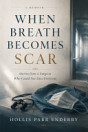
TENDING THE DYING: A Hospice Nurse’s Memoir of Grace and Grief
About this ebook
I was twenty-six years old. I had been a registered nurse for four years, but only three months into hospice work. Before that I had worked a surgical ward in Manchester – a place of frantic beeping machines, intravenous pumps that would not shut up, and a matron who believed that tears were unprofessional. I had left that ward because I could not bear the way we treated dying people there. We called them bed-blockers. We whispered about them at the nursing station. We changed their dressings and checked their obs and then walked away to the next task, because there was always a next task.
St Margaret’s was different. Smaller. Quieter. The corridors smelled of floor polish and chrysanthemums. The nurses wore their own clothes – cardigans, comfortable shoes, nothing that announced hospital. There was a kitchen where families could make toast at three in the morning. There was a garden with a bench that faced west, so that dying people could watch the sunset if they still had the strength to be wheeled outside.
I loved it. And I was terrified of it.
Because death had not yet become ordinary to me. It was still a visitor I did not know how to host.
That night – the night I am about to tell you – the handover sheet had only one name that mattered for my bay of four beds. The other three patients were stable, comfortable, not actively dying. But bed two held a woman named Eluned Hughes. Eluned was eighty-seven years old. Former seamstress. Widowed for fourteen years. No children. A niece who visited on Sundays but lived in Cardiff and could not be reached by telephone after nine o’clock at night.
The day nurse, a woman named Breda who had worked hospices since the 1970s, pulled me aside at the nursing station.
“She’s close,” Breda said. “Very close. The breathing changed around four o’clock. The mottling has reached her knees. I don’t think she’ll see morning.”
I nodded. I tried to look competent.
“You’ve sat with an active death before?” Breda asked.
“In training,” I said. “Once. A man with lung cancer. But there were three other nurses in the room.”
Breda looked at me for a long moment. She was a small woman with grey hair pulled back in a clasp and reading glasses on a chain around her neck. She smelled of tobacco and hand cream.
“Well,” she said. “Tonight there’s just you. And that’s all right. She doesn’t need a team. She needs one person who isn’t afraid to sit still.”
I was afraid. But I did not say so.
I checked on Eluned at nine o’clock, then ten, then eleven.
She lay on her side, curled towards the window as if she had been watching the dark for hours. Her mouth had fallen open. Her breathing came in a pattern I had learned to recognise from textbooks but had never witnessed for this long: a deep inhale, a pause, a shallow exhale, then nothing for ten seconds – sometimes fifteen – before the next breath arrived like a small wave after a long flat sea.
Cheyne-Stokes, it is called. But the name does not matter. What matters is how it sounds. Like someone rowing a boat and stopping to rest, rowing and stopping, each time the pause a little longer, and you begin to wonder if the next breath will come at all.
At eleven o’clock, Eluned’s niece called from Cardiff. I told her gently that it would be tonight. She wept on the telephone and said she could not drive in the dark – she was seventy-three herself, she had given up night driving after a scare on the M4 the previous winter. She asked me to tell Eluned she loved her. She asked me to hold her hand if she seemed afraid.
I said I would.
At half past eleven, I pulled a wooden chair to the side of Eluned’s bed. I turned off the overhead light and left only the small lamp on the bedside table – the one with the rose-coloured shade that made everything look like old velvet. I sat down. I reached for her hand.
Her fingers were cool and loose. The mottling – that purplish lacework that appears when the heart can no longer push blood to the extremities – had travelled up her forearms. I had seen that pattern before on dead people in the hospital mortuary, but never on someone still breathing.
She is dying, I thought. Right now. In front of me. And I am the only one here.
That is when the fear changed shape. It stopped being a fear of doing something wrong. It became a different fear: the fear that my presence was not enough. That I ought to be reciting prayers or reading poetry or performing some meaningful ritual. That sitting quietly in a chair at midnight was a failure of imagination.
I said her name. “Eluned.”
Her eyelids flickered. That was all.
I told her that her niece had called. I told her she was loved. I told her – and I still do not know why I said this – that the room was warm and the garden outside was full of roses that would bloom again in the spring, and that she did not have to wait for them if she was tired.
She made a sound. Not a word. A small exhalation that might have been relief.
And then I sat in silence for a very long time.
The silence was not empty. That is the first real lesson I learned that night.
Silence in a dying room is full of things. It is full of the creak of the bedsprings when the patient shifts without waking. It is full of the radiator’s gentle ticking. It is full of the sound of your own breath and the sound of theirs, and the long gaps between theirs that teach you something about patience you cannot learn anywhere else.
I sat for an hour. Then two.
At some point I realised I had stopped watching the clock. I had stopped wondering when it would happen. I had simply – and this surprised me – arrived. I was no longer a nurse performing a task. I was a person sitting with another person who was leaving. That was all. That was everything.
Around one in the morning, Eluned’s breathing changed again. The pauses grew longer. The breaths grew shallower. Her jaw relaxed further. I had read about the death rattle – the sound of secretions pooling in the throat – but Eluned did not have that. She had something quieter. A small click at the back of her throat with each inhale, like a key turning in a lock that had not been used for years.
I held her hand. I did not squeeze. I just held.
At 1:47 – I remember the exact time because I looked at the clock afterwards – Eluned took a breath that was barely a breath. A sigh, really. And then she did not take another one.
I waited. Five seconds. Ten. Fifteen. Thirty.
No breath came.
I put my hand on her chest. Nothing moved. I touched her neck – the carotid artery, the place they taught us in nursing school. No pulse.
I had expected something dramatic. A final gasp, a shudder, a sign that the soul had departed like a train leaving a station. But there was none of that. There was only stillness. Eluned Hughes had died in the middle of a sentence she was not speaking, in the middle of a thought she was not finishing, and the room was so ordinary afterwards that I almost laughed.
Not from cruelty. From disbelief. That was it? All that fear, all that waiting, all that preparation – and death arrived like a neighbour who lets themselves in without knocking, sits down, and says nothing at all.
I stayed in the chair for another twenty minutes. I do not know why. Habit, perhaps. Or a feeling that leaving too soon would be rude. I had heard older nurses say that hearing is the last sense to go, and I did not want Eluned’s ears – even dead ears – to hear the sound of a chair scraping back and footsteps walking away.
So I sat. And I talked to her quietly. I told her she had done well. I told her the garden would still be there in the morning. I told her I was honoured.
Then I stood up. I straightened her blanket. I turned off the rose-coloured lamp.
I walked to the nursing station and I wrote the time of death in the notes. My hand was steady. My handwriting was legible. But when Breda – who had come back to check on me – asked if I was all right, I opened my mouth to say yes and instead I burst into tears.
Breda did not hug me. She did not tell me it would get easier. She poured me a fresh cup of tea – hot this time – and she sat down across from me and said nothing at all.
That is when I understood what she had meant earlier.
She needs one person who isn’t afraid to sit still.
Breda had been that person for me. And I had been that person for Eluned. And somewhere in the chain of sitting still, the fear had not disappeared – but it had become something softer. Something wearable.
I drank my tea. I wiped my face. I went back to check on the other three patients, who were still sleeping, still breathing, still not ready to leave.
And I thought: I can do this. I do not know how, yet. But I can do this.
That was the first time I stayed.
I have stayed many times since. Hundreds of times. In council flats and care homes and private houses and hospital side-rooms. I have stayed for people who could speak and people who could not. I have stayed for people who were afraid and people who were furious and people who were so ready to go that they seemed impatient with the slowness of their own bodies.
But you never forget the first one. The first time you sit in the dark with a stranger and watch them become memory.
Eluned Hughes died eighteen minutes before the start of a new day. I have thought about her hundreds of times since that night. I have wondered if she knew I was there. I have wondered if it mattered. I have decided, finally, that it does not matter whether she knew. What matters is that I was there. That someone was there. That she did not have to make the crossing alone, even if the crossing turned out to be nothing more than a last breath and a long silence.
That is what this book is about. Not heroic rescues. Not medical miracles. Not the tidy, sentimental death that appears in films, where everyone says the perfect thing and the dying person smiles and closes their eyes.
This book is about the ordinary, difficult, sacred work of sitting still. Of staying. Of tending the dying not because you have mastered grief, but because you have decided that grief is not a reason to run away.
I am Hollis Parr Enderby. I am a hospice nurse. And I am still learning how to stay.
Discover more
About the author
Hollis Parr Enderby is a hospice nurse based in Manchester, England, with over twenty years of experience tending the dying in a palliative care setting. She trained as a nurse in the late 1990s, working first on a surgical ward before finding her calling in end-of-life care at St Margaret's Hospice. Her writing draws from thousands of night shifts, wooden chairs, and hands held in the dark. She lives alone with a lavender soap dispenser, a village of the dead who visit her dreams, and a quiet commitment to staying. This is her first book.