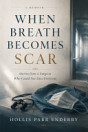
THE LAST CHART: One Family Doctor’s Final Year and the Patients Who Changed Everything
About this ebook
That clock was a liar.
It hung on the wall of my waiting room for thirty-one years, a round white-faced thing with black Roman numerals and a second hand that jerked rather than swept. In all that time, it never kept proper time. It ran fast in summer, slow in winter, and during one particularly damp February it simply stopped for a week before Mavis whacked it back to life with a rolled-up Pulse magazine.
I never replaced it. Patients would glance at it, frown, pull out their phones. Some would mention it. That clock’s wrong, Doctor. And I’d nod and say, I know. But neither of us ever did anything about it. It became part of the furniture of the place, like the scuff marks on the lino near the children’s corner or the particular way the front door stuck when the weather turned.
That clock is the first thing I think of now, when I try to remember how it felt to be a family doctor. Not the emergencies. Not the diagnoses. A broken clock in a tired waiting room.
This book is not about heroic medicine. No one gets airlifted off a mountain. No one discovers a miracle cure in a forgotten petri dish. This is about the ordinary work of general practice in a small market town in the East Midlands, during one final year that turned out to be less ordinary than I expected.
My name is Hollis Parr Enderby. I am – or I was – a GP. I retired on a Tuesday in late September, and by Wednesday morning I had no idea who I was anymore. The surgery keys sat on my kitchen counter like a little brass accusation. My stethoscope hung on the banister for a week before my daughter took it and made it into some sort of art project. I don’t ask what kind.
People say: You must miss it. And I do. But not in the way they think. I don’t miss the paperwork, the endless computer templates, the target-driven telephone triage, the way the job became more about ticking boxes than touching shoulders. I miss the quiet things. I miss the smell of instant coffee at 9:47am when Mavis would bring me a mug without my asking. I miss the particular relief on a patient’s face when they realised I was actually listening. I miss the weight of a prescription pad in my hand – that strange power to say this will help.
And I miss the stories. God, the stories.
Thirty-one years. Roughly thirty thousand consultations. Tens of thousands of human beings who sat in that green plastic chair opposite my desk, crossed and uncrossed their legs, folded their hands in their laps, and told me things they had never told anyone. Secrets about marriages, money, fears about lumps and bumps and shadows on scans. Confessions of loneliness so vast you could have sailed a ship across them. Small, devastating admissions: I don’t think my husband loves me anymore. I haven’t slept in six months. I’m frightened, Doctor. I’m so frightened.
And I sat there, pen in hand, and I tried to be worthy of that trust. Some days I was. Some days I was tired, or distracted, or silently calculating how many patients were still waiting, how many minutes I’d already run over, whether the practice manager would leave another passive-aggressive note about my consultation times.
This final year was different. I knew it would be my last – not because of illness, not because of any scandal or breakdown, but because I could feel the shape of the work changing inside me. The joy was still there, but it had become a quieter thing, a low ember rather than a flame. And the exhaustion had stopped being the good kind – the kind you feel after a hard shift and a proper meal – and had become something else. Something heavier. Something that didn’t lift.
So I gave notice. Twelve months. That was the agreement I made with the partners. One full year to say goodbye, to close charts properly, to do the work I’d always meant to do but never had time for. No rushed goodbyes. No sudden disappearance. A proper leaving.
What I didn’t know, that first day of my final year, was that the patients would change me more than I would change them. That the last twelve months would undo and remake me in ways I hadn’t asked for. That a broken clock and a green plastic chair and a stack of dog-eared medical records would turn out to be the classroom where I finally learned to be a human being, not just a doctor.
This memoir is my best attempt to remember it straight. I’ve changed names, dates, a few distinguishing details – not to hide the truth, but to protect the people who trusted me with theirs. Some of them are still alive. Some of them are not. All of them taught me something I didn’t know I needed to learn.
I should tell you about the waiting room. Not the physical space – you can imagine the magazines, the hand sanitiser, the laminated poster about flu jabs – but the particular atmosphere of it. That strange suspension between the life you were living five minutes ago and the life you might be living five minutes from now. That limbo where a cough becomes a cancer, a headache becomes a haemorrhage, a skipped heartbeat becomes the last normal moment before everything changes.
In that waiting room, patients sat side by side and never looked at each other. A woman who would be dead by Christmas sat next to a teenager with a verruca. A man having his first panic attack sat across from a pensioner whose only problem was that she was lonely. All of them watching that broken clock, all of them thinking they’ll see me soon, not knowing that soon was a lie we all told ourselves.
I was that clock’s keeper, in a way. I decided who got seen, who got sent away, who got referred, who got told it’s nothing to worry about when sometimes it was everything to worry about. The responsibility of that never left me, not for a single day.
This final year, I tried to carry it differently. More lightly, maybe. Or more honestly. I stopped pretending I had all the answers. I started saying I don’t know more often. I let patients see me tired. I let them see me sad. One afternoon, an old farmer with terminal lung cancer and I sat in silence for nearly ten minutes, and neither of us reached for a prescription pad or a platitude. We just sat. And at the end he said, Thank you, Doctor. That’s the first time anyone’s just sat with me.
That’s what I’ll miss. That’s what this book is for.
So. The clock on the wall. The green plastic chair. The kettle in the back room. The last year of a life’s work, told one chapter at a time, as faithfully as I can manage.
If you’re a doctor, you might recognise yourself here. If you’ve ever sat in a waiting room, you might recognise your own fear, your own hope, your own ordinary courage. And if you’ve never done either – well. Pull up that green chair. The kettle’s just boiled.
The clock is wrong, as usual. But we have time.
Discover more
About the author
Hollis Parr Enderby grew up in a small town in the north of England, the first in her family to go to university. She studied medicine because she wanted to help people and because she was good at science—two reasons that seemed sensible at the time and much less sensible after her first code blue. She trained as a doctor in the NHS, working in hospitals across the country, where she developed a deep respect for healthcare workers and a lasting fear of hospital coffee. She left full-time hospital medicine in 2022 and now works part-time in palliative care, where death is expected and honesty is required. She lives in Sheffield with too many books, not enough cupboard space, and a neighbour's dog she walks regularly. This is her first and probably only book, because writing it required reliving things she had spent years trying to forget. She hopes it helps someone feel less alone.