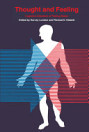
Thought and Feeling: Cognitive Alteration of Feeling States

·
Transaction Publishers
1 review
Ebook
239
Pages
Eligible

About this ebook

Recently there has been growing awareness and acceptance of the proposition that people do not exist in a world of physically defined forces and events, but in a world defined by their own perceptions, cognitions, conclusions, and imaginations. We respond and react not to some objectively defined set of stimuli, but to our own apperceptions of stimuli that we define subjectively. The original essays in this volume center on one aspect of this process of attribution: The extent to which the perception of events and causes results in the determination, modification, or alteration of emotions, feelings, and affective states.

This book is divided into five sections, each of which elucidates and extends these theoretical conceptions. Part 1 provides a historical background and analytical framework for the rest of the book. Part 2 presents chapters dealing with the sorts of internal cues which may give rise to a feeling state. Part 3 presents a chapter discussing the evaluative needs aroused by the internal cues. Part 4 is concerned with the process of explanation triggered by the evaluative needs. Part 5 deals with various external cues and how they are used to label the internal feeling state. There is a concluding discussion of the cognitive alteration of feeling states.

The authors deal with aggression, boredom, obesity, the control of pain, and delusional systems. This volume is of continuing importance to clinical and experimental psychologists as well as social psychologists. Each of the authors takes the theoretical concept of cognition and relates it to research in biofeedback, physiology, social psychology, altered states of consciousness, etc. Thus, the book bridges the gap between cognitive theory and the use of that theory in applied research.

Harvey London was associate professor in the Psychology Department at Long Island University. He was previously affiliated with Brandeis University and has been a visiting professor at Emory University and Hunter College. He has done extensive research work on several topics, including persuasion and psychological time.

Richard E. Nisbett is Theodore M. Newcomb Distinguished University Professor in the department of psychology at the University of Michigan. He is on the editorial board of Psychological Review, Cognition, Personality and Social Psychology Review, and Evolution and Human Behavior.

Recently there has been growing awareness and acceptance of the proposition that people do not exist in a world of physically defined forces and events, but in a world defined by their own perceptions, cognitions, conclusions, and imaginations. We respond and react not to some objectively defined...

Ratings and reviews

1 review
Alpha M Hane
May 9, 2014
Doesn't really discuss Thoughts & Feelings like the title would suggest.. it's only about experiments; doesn't talk about how to modify or challenge anything.. waste of 10bucks .. omg, this book truly sucks
Did you find this helpful?

Rate this ebook

Tell us what you think.

Reading information

Smartphones and tablets
Install the Google Play Books app for Android and iPad/iPhone. It syncs automatically with your account and allows you to read online or offline wherever you are.
Laptops and computers
You can listen to audiobooks purchased on Google Play using your computer's web browser.
eReaders and other devices
To read on e-ink devices like Kobo eReaders, you'll need to download a file and transfer it to your device. Follow the detailed Help Center instructions to transfer the files to supported eReaders.