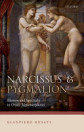
Narcissus and Pygmalion: Illusion and Spectacle in Ovid's Metamorphoses
Oct 2021 · Oxford University Press
Ebook
208
Pages
Tools
info
family_home
Eligible
info
About this ebook
Nature imitates art--not a paradox from Oscar Wilde's pen, but instead the bold formulation of the Latin poet Ovid (43 BCE-17 CE), marking a radical turning point in ancient aesthetics, founded on the principle of mimesis. For Ovid, art is independent of reality, not its mirror: by enhancing phantasia, the artist's creative imagination and the simulacrum's primacy over reality, Ovid opens up unexplored perspectives for future European literature and art. Through an examination of Narcissus and Pygmalion, figures of illusion and desire, who are the protagonists of two major episodes of the Metamorphoses, Rosati sheds light on some crucial junctures in the history of reception and aesthetics. Narcissus and Pygmalion has, since its first publication in Italian, contributed to the poet's critical fortunes over the past few decades through its combination of sophisticated literary critical thinking and patient argument applied to the poetics of self-reflexivity and, in particular, to the fundamental interface between the verbal and the visual in the Metamorphoses. A substantial introduction accompanies this new translation into English, positioning Rosati's work anew in the forefront of current discussions of Ovidian aesthetics and intermediality, in the wake of the postmodern culture of the simulacrum.
Nature imitates art--not a paradox from Oscar Wilde's pen, but instead the bold formulation of the Latin poet Ovid (43 BCE-17 CE), marking a radical turning point in ancient aesthetics, founded on the principle of mimesis. For Ovid, art is independent of reality, not its mirror: by enhancing phan...
Discover more
About the author
Gianpiero Rosati is Professor of Latin literature at the Scuola Normale Superiore (Pisa). He previously held teaching positions at the Universities of Florence, Pavia, and Udine.
Gianpiero Rosati is Professor of Latin literature at the Scuola Normale Superiore (Pisa). He previously held teaching positions at the Universities of Florence, Pavia, and Udine.
Rate this ebook
Tell us what you think.
Reading information
Smartphones and tablets
Install the Google Play Books app for Android and iPad/iPhone. It syncs automatically with your account and allows you to read online or offline wherever you are.
Laptops and computers
You can listen to audiobooks purchased on Google Play using your computer's web browser.
eReaders and other devices
To read on e-ink devices like Kobo eReaders, you'll need to download a file and transfer it to your device. Follow the detailed Help Center instructions to transfer the files to supported eReaders.