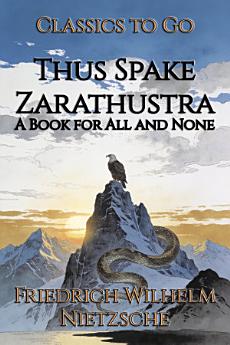
Thus Spake Zarathustra: Restored Classics to Go Edition
About this ebook
About the author
Friedrich Wilhelm Nietzsche was a German philosopher, cultural critic, and classical scholar born in 1844, whose brief but intensely productive life ended in 1900 after years of illness and mental collapse. Trained in philology and once appointed to a professorship at a remarkably young age, he gradually moved beyond academic study to become one of the most provocative and original thinkers of the modern age. His writings challenged conventional morality, religion, and inherited ideas of truth, and his distinctive style blended aphorism, poetry, and philosophical argument in a way that made his work both dazzling and difficult to classify. Nietzsche's most important achievements lie in his fearless reexamination of Western values, his critique of complacent social and moral systems, and his insistence that human beings must create meaning rather than passively receive it. Central to his thought are themes of self-overcoming, individual freedom, the dangers of herd mentality, and the need to confront suffering without illusion, all of which remain strikingly relevant in a world still shaped by ideological conflict, cultural uncertainty, and debates about identity and purpose. His legacy endures not only in philosophy but also in literature, psychology, political thought, and the arts, where his ideas continue to provoke, inspire, and unsettle readers. Today, Nietzsche remains essential for anyone interested in the struggle to live honestly, think independently, and find strength in a fractured world, and he will especially appeal to readers drawn to bold ideas, challenging questions, and writing that rewards careful reflection.