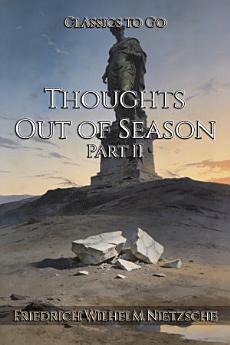
Thoughts Out of Season: Restored Classics to Go Edition
About this ebook
About the author
Friedrich Wilhelm Nietzsche was a German philosopher, cultural critic, and poet whose restless intellect transformed modern thought. Born in 1844 in Röcken, he was educated in classical philology and became a professor at a remarkably young age, but illness forced him to leave academic life and pursue his ideas as an independent writer. Over the course of a short, intense career, he produced some of the most provocative and influential philosophical writing of the nineteenth century, challenging conventional morality, religion, nationalism, and the certainties of his age. His work is marked by aphoristic brilliance, psychological insight, and a fierce concern with how human beings create meaning in a world without easy answers. He explored themes such as the will to power, the dangers of herd thinking, the tension between suffering and creativity, and the need for self-overcoming, ideas that continue to resonate in conversations about identity, authenticity, and freedom today. Though his later years were shadowed by mental collapse, his legacy only deepened, shaping existentialism, postmodern thought, literature, and cultural criticism. Readers today turn to Nietzsche not for comfort but for challenge: he rewards those willing to question inherited values and think boldly about the making of a life. He is especially compelling for readers interested in philosophy, psychology, and the enduring struggle to live honestly in a complicated world.