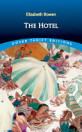
The Hotel: Restored Classics to Go Edition
About this ebook
Discover more
About the author
Elizabeth Bowen was an Anglo-Irish novelist and short-story writer whose life was shaped by movement, displacement, and the tensions between private feeling and public history. Born in Dublin in 1899 and later rooted in England, she came of age during a period of upheaval that would leave a deep mark on her imagination. Through a career that spanned the interwar years and the Second World War, she became one of the twentieth century's most distinctive literary voices, admired for her precise style, psychological insight, and ability to capture the fragile surfaces beneath which anxiety, memory, and desire quietly stir. Her fiction is especially celebrated for its elegant attention to atmosphere and social nuance, often revealing how war, class, family, and loneliness shape ordinary lives in unsettling ways. Bowen's writing remains strikingly relevant today because it explores uncertainty, emotional distance, and the instability of home with a clarity that still feels modern. She understood how people construct identities under pressure and how relationships can be both sustaining and precarious, themes that continue to resonate in an age of change and social fragmentation. Her legacy endures in the richness of her prose and the subtle power of her observations, making her essential reading for anyone who loves refined literary fiction, psychological depth, and stories that illuminate the hidden currents of human experience.