The Physics of Sexed Consciousness
Dr. I. Pearson
Jul 2026 · Women's Health Book 52 · Dr. I. Pearson
star
5 reviews
Ebook
30
Pages
family_home
Eligible
info
About this ebook
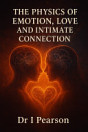
The Physics of Sexed Consciousness presents a physically explicit alternative to the claim that male and female minds are either identical or wholly separate. It proposes that both use the same Stein components, but develop through differently populated biological systems shaped by chromosomes, hormones, neural and glial architecture, organelles, vesicles, receptors, ionic state, embodiment and timing. These interacting factors create overlapping yet distinct distributions of conscious states rather than a single masculinity–femininity scale.
The book separates sex-linked biological infrastructure from acquired influences such as language, culture, fantasy, social roles and online experience, all of which can physically remodel the mind. It introduces quantitative tools for comparing local mental states, whole-system architectures and transitions between attractors. It also examines four routes of social inference, autism-related differences in self-modelling, and transgender identification. The central conclusion is cautious: cross-sex-like states may occur, but they do not by themselves demonstrate complete opposite-sex mental equivalence.
The Physics of Sexed Consciousness presents a physically explicit alternative to the claim that male and female minds are either identical or wholly separate. It proposes that both use the same Stein components, but develop through differently populated biological systems shaped by chromosomes, h...
Discover more
Ratings and reviews
5 reviews
About the author
I am a female medicine scientist and consultant, studying our fertility, menopause, cancers and medicine. I also write guides on female wellbeing, beauty, dance and romance. My books integrate biological insight with my own experience. I am the creator of Stein Theory, which I apply across physics, biology and medicine. I have authored over 100 books across medicine and women’s health education as well as AI and Physics. Outside research and writing, my creative interests include acrylic painting, songwriting, composing, and playing keyboards. https://about.me/i.pearson
I am a female medicine scientist and consultant, studying our fertility, menopause, cancers and medicine. I also write guides on female wellbeing, beauty, dance and romance. My books integrate biological insight with my own experience. I am the creator of Stein Theory, which I apply across physic...
Rate this ebook
Tell us what you think.
Reading information
Smartphones and tablets
Install the Google Play Books app for Android and iPad/iPhone. It syncs automatically with your account and allows you to read online or offline wherever you are.
Laptops and computers
You can listen to audiobooks purchased on Google Play using your computer's web browser.
eReaders and other devices
To read on e-ink devices like Kobo eReaders, you'll need to download a file and transfer it to your device. Follow the detailed Help Center instructions to transfer the files to supported eReaders.