About this ebook
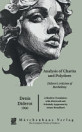
Prospectus as the initial manifesto or introduction to the Encyclopédie, laying out the aims and guiding principles of the monumental project he co edited with d'Alembert. In the Prospectus, Diderot emphasized the Enlightenment goals of disseminating knowledge, questioning ignorance, and promoting reason and human progress. It was later expanded into the more detailed "Discours préliminaire" (Preliminary Discourse) in 1751. In 1750 Diderot issued a rousing Prospectus that heralded one of the Enlightenment's greatest enterprises: the creation of the Encyclopédie. This prospectus is part announcement, part visionary essay, a three paragraph declaration that crystallizes the ambitions of an age. Written in confident, stirring prose, it invites readers and patrons into an audacious project to compile all human knowledge and make it accessible. The first paragraph boldly unveils the scope: Diderot describes a complete dictionary of sciences, arts, and crafts, complete with many volumes and detailed illustrations. He strikes a practical tone, reassuring the public that the manuscripts are prepared and the work is well underway, while simultaneously conveying the electrifying magnitude of the endeavor. Diderot, in an almost conversational yet impassioned manner, expounds why such an encyclopedia matters. He notes the spread of general enlightenment and how previous dictionaries of knowledge aided that cause, but he argues that a new, more integrated approach is needed. By reducing everything to a "dictionary form," he explains, the Encyclopédie will present facts but reveal the interconnections among them. For a modern reader, this Prospectus is intellectually thrilling. It reads as the blueprint for Wikipedia's 18th century ancestor but couched in elegant French rhetoric. It emphasizes collaboration (the project enlisted many contributors), dissemination of knowledge for both the learned and the self taught, and the democratization of information. All of this is delivered in a tone that is academic in its precision but accessible in its clarity. One does not need prior knowledge of the period to feel the excitement in Diderot's words; the Prospectus communicates a universal message: knowledge empowers, and by uniting it in one work, we empower all who seek to learn. In this edition, Prospectus appears with a new Afterword by the translator, a short biography, a glossary of Philosophical Terms used by Diderot, a chronology of his core life and works, and a summary index of all of Diderot's works. In Prospectus, Diderot's Enlightenment-era prose is translated into clear modern English, with attention to the ideas and debates that shaped the work.
Prospectus as the initial manifesto or introduction to the Encyclopédie, laying out the aims and guiding principles of the monumental project he co edited with d'Alembert. In the Prospectus, Diderot emphasized the Enlightenment goals of disseminating knowledge, questioning ignorance, and promotin...
Discover more
About the author
Denis Diderot (1713 to 1784) was a French writer, philosopher, art critic, and editor. He directed much of the Encyclopédie, wrote fiction and drama, and produced essays on art, religion, natural philosophy, education, politics, and the material basis of mind.
Denis Diderot (1713 to 1784) was a French writer, philosopher, art critic, and editor. He directed much of the Encyclopédie, wrote fiction and drama, and produced essays on art, religion, natural philosophy, education, politics, and the material basis of mind.
Rate this ebook
Tell us what you think.
Reading information
Smartphones and tablets
Install the Google Play Books app for Android and iPad/iPhone. It syncs automatically with your account and allows you to read online or offline wherever you are.
Laptops and computers
You can listen to audiobooks purchased on Google Play using your computer's web browser.
eReaders and other devices
To read on e-ink devices like Kobo eReaders, you'll need to download a file and transfer it to your device. Follow the detailed Help Center instructions to transfer the files to supported eReaders.