About this ebook
Every day, across borders and continents, people connect, collaborate, and share stories. Language is the bridge that unites us, unlocking opportunities, friendships, and understanding. In a world that is rapidly globalizing, the ability to communicate in more than one language is not just a skill—it is a superpower. For English and Albanian speakers, this bridge is especially vital, intertwining the rich histories, cultures, and aspirations of two vibrant communities.
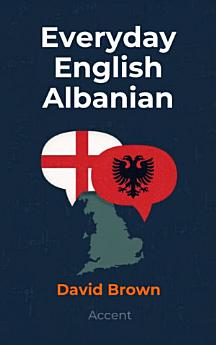
“Everyday English Albanian” is more than a language guide; it is your companion on a journey to practical fluency. Whether you are a traveler exploring the azure coasts of the Adriatic, a business professional forging transnational partnerships, or a heritage learner reconnecting with family roots, this book is designed for you. Here, language is not reduced to dry grammar rules or rote memorization. Instead, you will discover how to live, think, and express yourself authentically in both English and Albanian.
The Importance of Practical Language Learning
Why everyday language? Because fluency is not about knowing every obscure word or grammatical exception. True mastery lies in your ability to navigate real-life conversations: ordering coffee, introducing yourself, handling emergencies, making friends, and understanding local humor. The focus of this book is on the words, phrases, and cultural insights you need to thrive in daily situations.
Too often, traditional language textbooks dwell on abstract topics and outdated dialogues. Here, you will find content rooted in authenticity and modern usage. Each chapter unfolds a new domain of everyday life—from greetings and hospitality to shopping, transportation, work, and social media. You will encounter realistic conversations, contemporary vocabulary, and cultural notes that reveal how Albanians and English speakers truly communicate.
Who This Book is For
This book welcomes a diverse readership. You may see yourself in one or more of these profiles:
Absolute Beginners: You have little or no previous exposure to Albanian (or English) and seek a friendly, structured introduction.
Conversational Learners: You want to brush up on practical phrases for travel, work, or daily life.
Heritage Speakers: You grew up hearing Albanian or English at home, but want to strengthen your reading, writing, and speaking skills.
Business and Academic Professionals: You need reliable language tools and cultural insights to navigate meetings, negotiations, and formal exchanges.
Language Enthusiasts: You savor the beauty of multilingualism and appreciate the nuances of both languages.
No matter your starting point, this guide is designed to meet you where you are and help you advance confidently.
How to Use This Book
To maximize your progress, let’s outline the core structure and learning philosophy behind “Everyday English Albanian”:
1. Thematic Chapters
Each chapter is organized around a central theme or context—such as “Meeting People,” “Dining Out,” or “At the Doctor’s Office.” This approach helps you learn vocabulary and expressions in meaningful, relevant clusters rather than as isolated words.
2. Realistic Dialogues
You will find authentic dialogues modeled on real-life interactions. These conversations are annotated with translations, pronunciation tips, and cultural insights. By studying and role-playing these exchanges, you will gain the confidence to speak and understand both languages in context.
3. Vocabulary Banks
Key vocabulary is bolded and grouped for quick reference. Each term comes with its translation, pronunciation guide, and usage examples. Where relevant, you will also learn about synonyms, formal vs. informal register, and regional variations.
4. Grammar in Action
Grammar is not treated as a dry set of rules to memorize but as a living toolkit. Each chapter explains essential structures as they naturally arise in context—making them easier to grasp and retain.
5. Cultural Insights
Language is inseparable from culture. Throughout the book, you’ll find Culture Notes—mini-essays and tips that explain etiquette, gestures, humor, and the unspoken codes that shape everyday interactions. These insights help you go beyond words and connect with people on a deeper level.
6. Practice Makes Perfect
Every chapter concludes with reinforcement exercises—practical drills, short writing prompts, and conversational role-plays. These are designed to help you internalize what you have learned and apply it confidently.
The Albanian Language: An Overview
Before we embark on our journey, let’s take a moment to appreciate the unique character of the Albanian language.
Albanian (Shqip) is an Indo-European language with no close relatives. It boasts a rich literary tradition and a fascinating blend of influences from Greek, Latin, Slavic, Turkish, and Italian. Spoken by over 7 million people in Albania, Kosovo, North Macedonia, Montenegro, and the Albanian diaspora, it is a language of resilience and pride.
There are two main dialects: Gheg (spoken in the north) and Tosk (in the south, and the basis for standard Albanian). While this book focuses on the standard form, you will encounter notes on regional variations when relevant.
What makes Albanian distinctive is its clear, phonetic spelling, elegant vowel harmony, and expressive idioms. For English speakers, some features—like noun cases, verb conjugations, and definite/indefinite forms—may seem challenging at first. However, English and Albanian share many international words, modern loanwords, and a mutual love for humor and hospitality.
English: A Global Lingua Franca
On the other side of our bridge is English—the world’s most widely spoken second language. English is not only a native tongue for hundreds of millions but a practical tool for international business, travel, science, and diplomacy. Its flexibility, openness to new words, and global presence make it a dynamic, ever-evolving language.
For Albanian speakers approaching English, certain hurdles—such as irregular verbs, phrasal verbs, and unpredictable spelling—can be daunting. However, English’s straightforward grammar, gender-neutral nouns, and abundance of learning resources provide a welcoming starting point.
The Power of Bilingualism
Learning a new language is an investment in yourself. Studies show that bilingualism enhances cognitive flexibility, boosts memory, and sharpens problem-solving skills. It also deepens empathy, as you learn to see the world from another’s perspective. For Albanians living abroad, or for English speakers with Albanian friends or family, bilingualism is a way to stay connected to heritage, identity, and community.
Tip: “Mistakes are proof you are trying.” Don’t aim for perfection—aim for progress. Every attempt to speak or understand a new language is a step forward.
What You Will Achieve
By working through this book, you will be able to:
Introduce yourself and others with confidence.
Engage in everyday conversations: shopping, dining, directions, emergencies, and more.
Express opinions, needs, and preferences clearly and politely.
Navigate formal and informal situations with appropriate language and etiquette.
Understand cultural contexts that shape both English and Albanian communication.
Expand your vocabulary and master essential grammar without overwhelm.
Develop listening, speaking, reading, and writing skills in both languages.
Setting Expectations: The Learning Journey
Learning a language is a marathon, not a sprint. There will be moments of excitement, discovery, and—yes—frustration. You may forget words, stumble over pronunciations, or feel lost in translation. This is normal. The key is consistency and a positive mindset.
Practice daily: Even short, regular sessions are more effective than occasional cramming.
Speak aloud: Don’t just read—listen, repeat, and mimic native speakers.
Keep a journal: Write sentences, new words, and reflections.
Find a language buddy: Practicing with others accelerates growth.
Celebrate milestones: Every new conversation, no matter how basic, is a victory.
A Note on Pronunciation and Script
This book uses the Latin alphabet for both languages. Albanian pronunciation is largely phonetic—each letter corresponds to a specific sound. English, by contrast, is less predictable, so pronunciation guides and phonetic transcriptions are included where needed.
Pay attention to subtle sounds and local accents. Listening to native speakers (through media, music, or conversation) will help you internalize authentic pronunciation.
A Personal Invitation
As the author of this guide and a lifelong language enthusiast, I invite you to approach this journey with curiosity and courage. Language learning is not just about words; it is about stories, laughter, and connection. Whether you dream of chatting with market vendors in Tirana, navigating a London airport, or sharing family stories across generations, the tools within these pages are yours to use and adapt.
Remember, every phrase you learn is a new key in your pocket—a key that unlocks doors to friendships, opportunities, and a richer understanding of the world.
How to Begin
Start at the beginning, or jump to chapters that match your immediate needs. Review the vocabulary banks, practice the dialogues, and try the exercises at the end of each chapter. Write your own sentences, and don’t hesitate to revisit challenging sections.
Reminder: Progress, not perfection. Allow yourself to make mistakes, laugh at them, and keep moving forward.
Together, let us cross the bridge between English and Albanian—one conversation at a time.
Welcome to Everyday English Albanian—your guide to practical communication, cultural understanding, and language confidence.
About the author
David Brown is a storyteller fascinated by the "fracture between worlds" and the "invisible scripts of power" that govern human survival. With a narrative style that moves restlessly between "stark clarity and chaotic nightmare," Brown explores themes of memory, selection, and the "cages we build" for ourselves.
In To Than Chi Ton, she utilizes a unique dual-language format to mirror the "split consciousness" of her characters, blending the traditions of gothic bureaucracy with the high-stakes world of martial arts fantasy. Brown not only writes but also designs and provides the art for her works, creating a holistic, "ornate" experience for the reader. She currently lives and works within the creative "rooms" of her own making, always seeking the "chill of recognition" in the stories she tells.