About this ebook
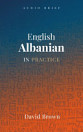
The English Albanian Grammar Guide is designed as a comprehensive resource for learners, educators, travelers, translators, and language enthusiasts who seek to master the grammatical foundations and nuances that define these two languages. Whether you are an English speaker aspiring to learn Albanian, an Albanian speaker aiming to improve your English, or someone with a deep interest in comparative grammar, this guide will serve as a pathway to understanding, clarity, and confident communication.
Why Learn Albanian and English Grammar Together?
While English stands as the world’s lingua franca—used in business, science, diplomacy, and entertainment—Albanian maintains a unique place as the national language of Albania and Kosovo, with significant communities in North Macedonia, Montenegro, Italy, Greece, and the Albanian diaspora worldwide. Studying the grammar of both languages side by side offers distinct advantages:
Contrastive Analysis: By directly comparing English and Albanian grammatical structures, learners can identify key differences and similarities that aid in quicker mastery and in avoiding common errors.
Cultural Insight: Grammar is deeply bound to culture. Understanding the grammatical logic of Albanian provides insight into the Albanian way of thinking, social customs, and modes of expression.
Practical Communication: Whether for travel, business, or personal relationships, a solid grasp of grammar is essential to convey meaning, nuance, and intent accurately in both languages.
The Scope and Structure of This Guide
This guide is intentionally structured to provide a logical progression from fundamental concepts to advanced grammatical topics. It begins with the building blocks—alphabet, pronunciation, and sentence structure—and systematically advances through verbs, tenses, nouns, articles, adjectives, pronouns, prepositions, conjunctions, questions, negation, and more. Each chapter offers:
Detailed Explanations: Clear, concise breakdowns of grammatical rules and patterns in both English and Albanian, with direct comparisons.
Contextual Examples: Realistic, everyday sentences and dialogues that highlight usage in context.
Actionable Techniques: Practical tips for mastering challenging concepts and applying them in conversation and writing.
Common Pitfalls: Warnings about frequent mistakes made by learners, along with strategies for avoiding them.
Exercises: Reinforcement activities to practice and internalize new knowledge, including translation tasks, fill-in-the-blanks, and sentence construction.
Tip: As you progress, take notes, practice aloud, and revisit challenging sections. Language mastery is achieved through active engagement and repetition.
The Importance of Grammar in Language Learning
Grammar is often perceived as the dry, technical aspect of language learning—an obstacle to fluent communication. In reality, grammar is the skeleton that gives structure to language, allowing us to convey complex ideas, emotions, and relationships. Without grammar, words are a collection of fragments; with grammar, they become a coherent and expressive whole.
Clarity of Expression: Precise grammar ensures that your meaning is understood without ambiguity.
Cultural Respect: Using correct grammar demonstrates respect for the language and its speakers.
Confidence: Mastery of grammar instills self-assurance in writing, speaking, reading, and listening.
In the context of English and Albanian, grammar plays an even more crucial role due to the significant structural differences between the two languages. For example, while English relies heavily on word order and auxiliary verbs, Albanian utilizes a system of declensions, conjugations, and unique particles.
Navigating the Challenges: A Learner’s Perspective
Every language pair presents a unique set of challenges. For an English speaker learning Albanian, the unfamiliar sounds, cases, and verb forms can seem daunting at first. For an Albanian speaker learning English, issues such as phrasal verbs, irregular verbs, and articles often prove to be stumbling blocks.
Through years of teaching, translating, and researching both languages, I have identified common challenges and effective strategies for overcoming them. This guide is infused with practical insights, memorable analogies, and comparative tables that make abstract concepts tangible.
Reminder: Mistakes are an essential part of the learning process. Each error brings you closer to mastery—embrace them, learn from them, and move forward.
The Evolution of English and Albanian Grammar
An understanding of grammar is not complete without appreciating its historical evolution. English, a Germanic language with significant Romance and Latin influence, has undergone dramatic change over centuries—from Old English to Modern English, shaped by conquests, trade, and globalization.
Albanian, an Indo-European language with no close relatives, has a history stretching back over two millennia. It has absorbed influences from Latin, Greek, Slavic, Turkish, and Italian, yet it retains a unique grammatical structure found nowhere else in Europe.
This guide will occasionally highlight fascinating linguistic histories and etymologies, providing depth and appreciation for the living nature of language.
Who Is This Guide For?
The English Albanian Grammar Guide is suitable for a wide range of readers, including:
Beginners: Those taking their first steps in either English or Albanian, seeking a clear and structured introduction.
Intermediate Learners: Students looking to deepen their understanding and iron out persistent errors.
Advanced Learners: Those striving for fluency, precision, and idiomatic usage.
Teachers and Tutors: Professionals seeking reliable explanations, exercises, and comparative insights to support their students.
Translators and Interpreters: Linguists requiring detailed knowledge of grammatical equivalencies and differences.
Travelers and Businesspeople: Individuals needing practical language skills for everyday communication, negotiations, and presentations.
The guide is also valuable for heritage speakers—those who grew up in bilingual households—wishing to strengthen their command of either language for personal or professional reasons.
Methodology and Pedagogical Approach
This guide is grounded in the latest research in applied linguistics, cognitive science, and language pedagogy. Each chapter is designed to:
Build Sequentially: Concepts are introduced in a logical order, with each chapter building upon previous knowledge.
Encourage Active Practice: Language is best learned by doing. Each section includes opportunities for practice and review.
Foster Comparative Thinking: Side-by-side analysis helps learners recognize patterns and anticipate challenges.
Promote Cultural Understanding: Language is inseparable from culture; authentic materials and examples bring grammar to life.
“To learn a language is to have one more window from which to look at the world.” — Chinese Proverb
A Note on Pronunciation and Spelling
Both English and Albanian have unique pronunciation systems, with sounds that may not exist in the learner’s native tongue. To aid with this, the guide includes:
Phonetic Transcriptions: Where helpful, words are accompanied by International Phonetic Alphabet (IPA) symbols to clarify pronunciation.
Audio Resources: Recommendations for accessing supplementary audio materials for listening and imitation.
Spelling Tips: Guidance on common spelling pitfalls and strategies for memorizing tricky words.
The Role of Context in Grammar Mastery
Grammar is not learned in isolation, but in context. Throughout this guide, you will find:
Dialogues: Simulated conversations that model grammatical structures in real-world settings.
Stories and Scenarios: Brief narratives that illuminate grammar in action.
Functional Language: Phrases and constructions for specific purposes—introductions, travel, business, emergencies, and more.
These elements ensure that your study remains relevant, engaging, and oriented toward real-life application.
Setting Expectations and Goals
Mastering the grammar of any language is a journey, not a sprint. Set realistic goals, measure your progress, and celebrate each milestone. Whether your aim is conversational fluency, academic excellence, or professional competence, this guide will equip you with the tools to achieve your objectives.
Tip: Consistency is more valuable than intensity. Study regularly, even if only for a few minutes each day, and you will see steady progress.
How to Use This Guide
To maximize the benefits of this guide:
Read Actively: Don’t just read—engage with the material. Answer questions, complete exercises, and test yourself.
Practice Regularly: Speak, write, and listen as much as possible. Use the examples as models for your own expressions.
Reflect and Review: Return to difficult sections, review your mistakes, and track your improvement.
Supplement Your Learning: Pair this guide with conversations with native speakers, media consumption (films, podcasts, books), and language exchange opportunities.
Final Thoughts: Embracing the Journey
Learning grammar is not merely about memorizing rules—it is about acquiring new ways of thinking, expressing, and connecting. It is an act of curiosity, humility, and openness. As you progress through the chapters of this guide, remember that every challenge is an opportunity for growth, and every new grammatical structure is a tool for deeper understanding.
May this guide be your trustworthy companion as you navigate the fascinating worlds of English and Albanian grammar. Let us now begin our journey with the foundational elements—the alphabets, pronunciation, and the basic building blocks of sentences.
Turn the page to Chapter 1: The Albanian and English Alphabets & Pronunciation.
About the author
David Brown is a storyteller fascinated by the "fracture between worlds" and the "invisible scripts of power" that govern human survival. With a narrative style that moves restlessly between "stark clarity and chaotic nightmare," Brown explores themes of memory, selection, and the "cages we build" for ourselves.
In To Than Chi Ton, she utilizes a unique dual-language format to mirror the "split consciousness" of her characters, blending the traditions of gothic bureaucracy with the high-stakes world of martial arts fantasy. Brown not only writes but also designs and provides the art for her works, creating a holistic, "ornate" experience for the reader. She currently lives and works within the creative "rooms" of her own making, always seeking the "chill of recognition" in the stories she tells.