About this ebook
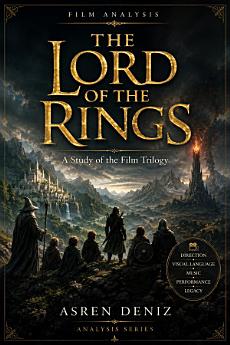
The Lord of the Rings: A Study of the Film Trilogy is an independent exploration of the filmmaking craft, creative decisions, technical innovations, and cultural legacy behind an extraordinary fantasy film trilogy.
Rather than retelling the story scene by scene, Asren Deniz examines the trilogy through the language of cinema: direction, adaptation, geography, visual effects, music, performance, editing, cinematography, and cultural influence.
At the center of the book is one of adaptation's most difficult questions: How can an enormous literary world be transformed into a cohesive cinematic experience without losing its emotional core?
The study begins with directorial vision and adaptation choices, examining how a sprawling source could be reshaped for a different storytelling medium. Character arcs had to be compressed, certain elements reorganized, and internal literary experiences translated into images, gestures, performances, sound, and editing.
The book then explores one of the trilogy's most recognizable strengths: its use of geography.
Mountains, forests, valleys, volcanic landscapes, weather, and natural light are considered not simply as backgrounds, but as active storytelling tools capable of communicating danger, hope, isolation, scale, and emotional transformation.
Another major focus is the balance between practical and digital effects. Miniatures, prosthetics, forced perspective, physical sets, digital crowds, and performance-capture technology are examined as parts of a unified visual strategy in which technology serves storytelling rather than replacing it.
Music receives its own detailed examination. Recurring themes, cultural musical identities, silence, vocals, and leitmotif techniques demonstrate how a score can become an active narrative voice rather than simple background accompaniment.
Performance and ensemble acting are also explored, including physical preparation, character interpretation, the challenges of maintaining consistency across a massive production, and the evolving relationship between traditional acting and digitally realized characters.
The study then turns to editing and pacing. How can three individual films function both as satisfying experiences and as parts of one enormous narrative? Parallel editing, time compression, pacing shifts, and extended endings reveal how editorial decisions shape the emotional experience of a cinematic epic.
Inside this film study:
• Directorial vision and adaptation choices
• Geography as an active cinematic character
• Practical effects and digital visual effects
• Forced perspective and scale illusion
• Performance-capture technology
• Music, leitmotifs, and cinematic identity
• Acting and character interpretation
• Ensemble performance
• Editing, pacing, and parallel storytelling
• Visual representations of power and corruption
• Light, color, composition, and camera movement
• The cultural impact of epic fantasy cinema
• Extended editions and alternative editorial choices
• Lessons for filmmakers, editors, writers, and creators
The book also examines how the trilogy helped reshape perceptions of fantasy cinema, contributed to developments in filmmaking technology, influenced film tourism, and remained a cultural reference point long after its original release.
Finally, the theatrical and extended editions provide a fascinating case study in editing itself. By examining how additional material changes characterization, pacing, and worldbuilding, the book demonstrates that the same cinematic story can produce different experiences depending on editorial choices.
The Lord of the Rings: A Study of the Film Trilogy is designed for viewers who want to go beyond simply watching an epic fantasy and understand the filmmaking architecture beneath it.
Whether you are a film enthusiast, fantasy reader, aspiring filmmaker, screenwriter, editor, or student of visual storytelling, this study offers a deeper perspective on how cinematic scale and intimate human emotion can work together.
Independent Analysis Notice: This book is an independent work of film criticism and commentary. It has no official affiliation with, endorsement from, or connection to the production under discussion, its director, cast, production companies, or distributors.